We’re Reading Unbroken Brain by Maia Szalavitz in Blacksburg, VA

In Blacksburg, Virginia, we’ve been reading Maia Szalavitz’s latest book, Unbroken Brain: A Revolutionary New Way of Understanding Addictionsince it was released two months ago on April 6, 2016.

We’re ready to meet and talk!Unbroken Brain by Maia Szalavitz
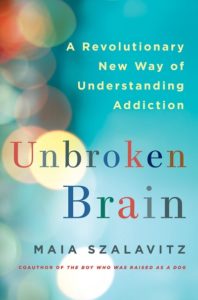
We’ll gather for a community book discussion of Unbroken Brain on Wednesday, June 22, 2016 at 7:00 PM in the Community Room at Blacksburg Library, 200 Miller Street, in Blacksburg, Virginia.

The event is free and open to the public!

We invite you to prepare for a lively discussion by considering these questions.

If you’ll sign up on the Facebook event page, we’ll know how many chairs to set up!

If you have any questions, feel free to contact Anne Giles, 540-808-6334, anne@annegiles.com.

To learn more about author Maia Szalavitz:

Unbroken Brain – Reading Group Discussion Questions

Unbroken Brain: A Revolutionary New Way of Understanding Addiction, by Maia Szalavitz, St. Martin’s Press, April 6, 2016

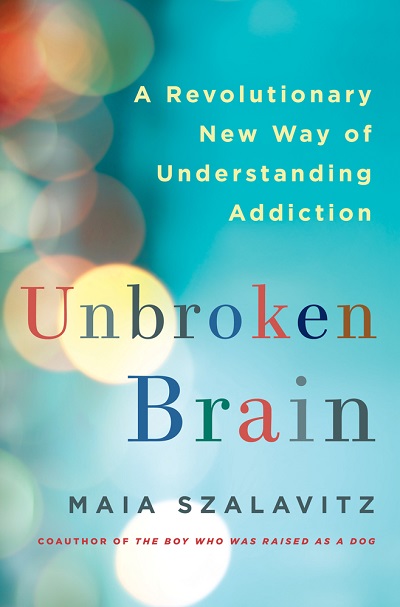
Unbroken Brain by Maia SzalavitzUnbroken Brain braids together three narratives: Maia Szalavitz’s personal story, what the science reports about addiction, and a call to action to change belief-based addictions treatment to evidence-based treatment.

Questions for discussion:

  1. What could you relate to in Maia’s personal story?
  2. What have you believed to be true about addiction? Has Unbroken Brain challenged your beliefs about addiction? If so, in what ways?
  3. The subtitle of Unbroken Brain is “a revolutionary new way of understanding addiction.” Do you have a new understanding of addiction as a result of reading Unbroken Brain? If so, what are the highlights of what you now understand?
  4. What do you still not understand about addiction? If you could speak with the author, what three questions would you ask her that seem unanswered to you in Unbroken Brain?
  5. If your life, or the lives of loved ones or of those you know, has been touched by addiction, does Unbroken Brain help you better understand what happened? If so, how?
  6. What concepts in Unbroken Brain did you find most challenging? Please select three to discuss.
  7. What concepts in Unbroken Brain did you find most relieving or satisfying? Please select three to discuss.
  8. Has your idea of drugs and drug use changed after reading Unbroken Brain? If so, how?
  9. Did anything in Unbroken Brain shock or surprise you? If so, what?
  10. After reading Unbroken Brain, how would you describe addiction to someone who doesn’t understand it?
  11. Do you feel called to take action after reading Unbroken Brain? If so, what would that be?
  12. What discussion question do you wish had been on this list? Please write it here and consider sharing it with the group: _________________________________________

To learn more about author Maia Szalavitz:

The Reading Group Discussion Questions for Unbroken Brain were written by Anne Giles and Laurel Sindewald.

Last updated 6/18/16

Why I Will Lie to You If I Drink Again

Before, I had three physical needs to stay alive: air, water, and food. My existence would signal me when doing without was putting me at risk. Inhale deeply, splash water from the tap into a glass, peel the wrapper on a Larabar, and I was restored to stability.

Now, as a result of having alcohol use disorder, I have four needs: air, water, food, and alcohol. For me, not drinking alcohol is like – all day, every day – taking shallow breaths through parched, cracked lips, faint with hunger. My existence is alarmed by this constant lack, warning me that we simply must drink alcohol to save this life. Yesterday marked 3 and 5/12 years I have denied myself alcohol.

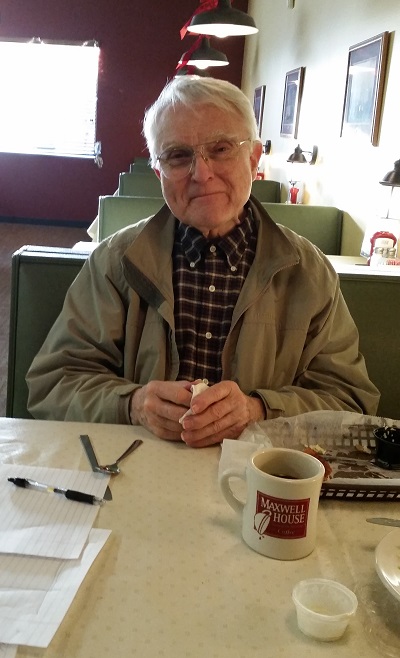
My dad

I expect to deny myself alcohol again today. I’m not excited about it. Doing without a need offers a marginal, partial, unstable life.

I heard a treatment professional say, “Addicts lie. That’s what they do.” In her book Unbroken Brain, Maia Szalavitz recounts the bitter joke, “How do you know when an addict is lying? When his lips are moving.”

If I drink a glass of chilled sauvignon blanc at 5:00 PM today, if you call me at 5:30 PM and ask me if I am still drinking I will say, “No.”

But I will still be drinking because that’s what addiction is, as Szalavitz succinctly puts it: “compulsive behavior that persists despite negative consequences.” During several of the last times I drank, I fell, usually down the stairs. The odds are good if I drink again, I will fall again. This house has two staircases with which to offer me negative consequences. But I will have bought two bottles of wine to drink, not one.

I will lie to you.

I will lie to you because I am afraid that, if I don’t, you will come over and take away my lungs full of air, my moistened lips, my satiated belly, my quivering, grateful relief at finally being free from constant deprivation. My marginal, partial, unstable life will feel full, whole, and safe. And, for me, I will feel loved like I would if my mother, gone four years, were back here with me. I so long to talk with her about everything that’s so very hard.

Who wouldn’t lie to protect that?

I have beloved people in my life with addiction and they have told me appalling, heartbreaking lies, lies that caused me to doubt myself, to doubt beliefs I hold dear, to take actions I hoped would be helpful that ended up in near ruin for me and for them. That what they persisted in doing tortured me repeatedly and mercilessly was the hardest blow. Were they, in fact, monstrous?

My father turned 83 years old a few days ago. Just over a year ago, I moved into a house on the next street to be nearby to help in case he needs it. If I took a drink today, and the additional drinks that would inevitably follow, I would be actively ill with alcoholism again and my father would be devastated. He did absolutely nothing to cause my drinking, he would not be at fault or to blame, he would not be responsible, and he wouldn’t deserve it, not at all. He would agonize that I didn’t love him enough, that he wasn’t lovable enough, that he hadn’t loved me enough.

If I drank today, it would be monstrous.

I cannot promise I will not take a drink today. I will do my best. But I cannot guarantee it.

I have a health condition – not a moral or spiritual failing – for which I did not receive immediate health care. It’s a health condition that under-sensitizes me to pleasure, over-sensitizes me to pain, impairs my decision-making ability, and confounds my ability to make a plan and follow through with it. The exact qualities that I need to help myself – see what needs to be done, tough it out, and do it – are impaired by the very condition itself. I live a no-win, double bind.

I am uncertain how reversible advanced addiction is with late intervention. We shall see.

I wouldn’t wish what I have, or what this does to loved ones, on anyone.

Over 2 million American are estimated to have opioid use disorder. But over 18 million Americans are estimated to have alcohol use disorder. If the first number qualifies as a crisis, the second qualifies as an apocalypse.

Whatever addiction is plaguing them, let’s get people like I am effective help right now.

Right now.

My Addictions Recovery Self-Evaluation Checklist

Updated 9/17/18: Here’s a new version of this post as a pdf.: Self-Care Checklist for People with Substance Use Issues. (Link opens in a new tab.)

. . . . .

To what extent do I agree that I have taken action this week on each recovery-supporting item suggested below?

I use the following scale to rate my agreement with each statement. If the statement does not apply to me – for example, I don’t use tobacco products – I write “N/A” (not applicable) on the line.

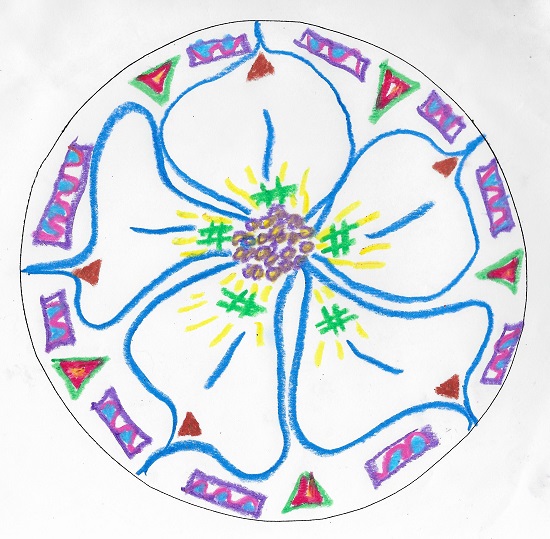
Illustration by Anne

5 – Strongly agree
4 – Agree
3 – Neutral
2 – Disagree
1 – Strongly Disagree

_____ I have taken prescribed medication(s) at the correct time(s) each day and in the correct dose(s).

_____ I have attended medical appointments, scheduled a medical appointment, or checked my calendar to remind myself of upcoming medical appointments.

_____ I have been aware of my basic needs and have done what I can to help get my needs met. I am working on self-care.

_____ I have practiced sleep hygiene and I am working on establishing a regular sleep pattern for myself.

_____ I am working on establishing a regular schedule for myself to support my stability. I am working on radically accepting the paradox that imposing structure on my days gives me the freedom to be more present for them.

_____ I have engaged in daily physical movement and/or physical activity.

_____ I have centered my diet around nutrient-rich, recovery-supporting foods and eaten on a regular schedule. I drink plenty of water and help myself stay neither too hungry nor too full.

_____ I have monitored my consumption of caffeine and have maintained, reduced or eliminated it.

_____ I have monitored my use of tobacco products and have cut back when I could.

_____ I have become aware of my physical sensations, feelings, thoughts, and actions without judging or criticizing myself or my experience. I observe and identify patterns of feeling, thinking and behaving. I am learning mindfulness.

_____ I am becoming aware of what has my attention. I can engage, disengage, and shift my attention based on what I think is beneficial for me. I am applying what I’m learning and practicing it.

_____ I have listened for negative self-talk. I can separate helpful thoughts from unhelpful thoughts. I attempt to replace my negative thoughts with supportive thoughts.

_____ I have become conscious of when I am experiencing strong sensory states, strong states of emotion, or many thoughts at once. I am aware of when I am in emotional or physical pain. I have used supportive self-talk and other tools to calm myself enough to be able to think before taking action. I am learning to tolerate distress and to regulate my emotions.

_____ I have attended individual and/or group counseling sessions.

_____ I have met with, talked on the phone with, or texted people who support my recovery. I am learning interpersonal effectiveness skills.

_____ I have worked on building social support, social connections, a social network, community membership, and a sense of belonging. I may have attended support groups such as SMART Recovery, Alcoholics Anonymous, Narcotics Anonymous, and others. I may have joined community groups and common interest groups, volunteer organizations, sports teams and/or engaged in other group activities. I seek enough social interaction to feel connected and stimulated, but not so much that I feel overwhelmed and over-stimulated.

_____ I am exploring and discovering my preferences and personal interests. I am trying different activities, pastimes and hobbies to see which ones engage me.

_____ I am working on believing in my worth and learning my strengths. I acknowledge myself when I believe I can do something, say I will do it, and do it. I am learning to support my sense of self-efficacy.

_____ I am discovering purpose and meaning through self-reflection, self-discovery, and interactions with others. I am taking action on my purpose through paid work, volunteer work, and/or education.

_____ A recovery-supporting practice personally effective for me that I have done this week is: ________________________________________________________________________________.

_____ MY TOTAL. I can choose to create a total or not based on what I deem helpful to me as I discover the recovery path that is uniquely effective for me. I can change the wording of the items on this list, as well as add and subtract items as my understanding evolves. I can weigh some items more heavily than others and rank them in the order that’s most beneficial to me. I can use this list or not. If it seems helpful to me, I can track my totals over time.

It’s my life. Don’t you forget.
It’s My Life, Talk Talk

. . . . .

How am I doing? How do I know?

What helps most people most of the time? Current data indicates that up to 98% of people with substance use disorders (SUDs) have co-occurring mental illnesses and significant numbers have experienced trauma in their lifetimes.

The list of recovery-supporting actions above is based on best efforts to distill current knowledge of evidenced-based practices, in priority order, that may assist many people much of the time with these challenges. At this time, no addictions treatment works for all people all the time.

I did not link the text above because every word could be highlighted and linked to multiple, readily-accessible sources. Where we couldn’t find research summaries, we created them. These links might be useful:

The content of this post is for informational purposes only and is not a substitute for medical, psychological or professional advice. Consult a qualified health care professional for personalized medical, psychological and professional advice.

Last updated 6/15/18

The Science of Addiction Is In

As a person recovering from alcohol use disorder for 3 and 1/3 years, I acknowledge that, early on, I made the mistake of believing my personal experience with what was helpful could and should be replicated. I realized that my sample size of one is absolutely not sufficient data from which to draw inferences about a larger population, especially given the complexity and variability of addiction.

Unbroken Brain by Maia SzalavitzMaia Szalavitz expresses this fallacy in logic in her article on Prince’s death: “I thought that simply having experienced addiction qualified me as an expert and incorrectly relied on anecdote, not data.” To correct my own error, I have relentlessly studied the research on addiction to grow evidence-based expertise.

That’s been a miserably difficult task. I’ve written extensively on my blog about my inability to find consensus in the literature about what addiction is and what effectively treats it. What I have found often plunges me into despair.

According to the definition used in addictions treatment from the American Society of Addiction Medicine (ASAM), addiction has “characteristic bio-psycho-socio-spiritual manifestations.”

Wikipedia defines spirituality as how one seeks meaning.

Did I become addicted to alcohol because my method of seeking meaning has been flawed?! Half a century of “Know thyself“and “The unexamined life is not worth living” and it was all wrong?! According to ASAM, it must have been. Because there I was, unable to stop drinking. The sorrow, the grief, the shame – unbearable! And now here I am, wishing I could drink.

Criticizing the ASAM definition, Maia Szalavitz writes in Why the “Disease Model” Fails to Convince Americans That Addiction Is a Health Issue, “The ‘spiritual’ part is something no other medical specialty feels compelled to mention in its official documents.”

What world have I fallen into? Why doesn’t anyone know what’s happening and what to do about it? Melted Dali clocks are everywhere. I’ve never been more frightened, more uncertain, more disoriented. How am I to save myself from addiction if no one knows what to do? What does the science say?

The science is in – comprehensively reported in the just-released book by Maia Szalavitz, Unbroken Brain: A Revolutionary New Way of Understanding Addiction. Finally, someone understands what abstinence has been like for me: “I felt utterly stripped of safety and love…what tormented me most wasn’t the nausea and chills but the recurring fear that I’d never have lasting comfort or joy again.” (34)

I cried with relief when I read that. And I cried a few more times, but primarily felt my spirits and hope rise as I read Unbroken Brain. Szalavitz braids together her personal narrative, the science of addiction, and a call to action to replace experience-based and belief-based treatment with evidence-based treatment. Whew, yes, let’s do that.

Whatever term one uses for addiction – disease, disorder, illness – I didn’t make this happen to myself through moral or “spiritual” failing. I’m released from the fruitless, desperate search to figure out what I did wrong so I don’t do it again and return to drinking. My job is to keep figuring out what helps me stay abstinent from alcohol – the treatment I need, not the one for all.

. . . . .

I am part of a local community group in the Blacksburg, Virginia area reading Maia Szalavitz’s Unbroken Brain: A Revolutionary New Way of Understanding Addiction. We’re compiling a list of her recent publications and interviews here. If you would like to join us, please contact me and I’ll invite you to our discussion meetings.

Last updated 1/12/17