How I Help Myself Now to Handle What’s Next

If I can become aware, in the moment, of what I am giving my attention to, what I am feeling, what I am thinking, and what physical sensations I am experiencing, and do so without judgment, I can use this information to help myself decide what would be most helpful for me to say or do next – or not say or not do.

ATTENTION

Self-hug“To what am I giving my attention right now?”

Here are ways to help myself become more aware of to what I am giving my attention:

FEELINGS

“What am I feeling right now?”
“On a scale of 1 to 10, what is the intensity of that feeling?”

Here are ways to help myself become more aware of what I am feeling, and to adjust the intensity of my feelings to a range that feels stable to me:

  • Identify and name my feelings using the Feelings Wheel or other online source.
  • Imagine an inner volume control on my feelings. Imagine myself matter-of-factly dialing down the volume if my feelings are ramped up too high for me to feel stable, or dialing up the volume if my feelings get so low that I feel unmotivated.

THOUGHTS

What am I thinking right now?

Here are ways to help myself become more aware of what I am thinking:

  • State my thoughts to myself in simple sentences: “I am thinking ___________.”
  • Imagine two piles for my thoughts, one pile for “helpful” and one pile for “unhelpful.” As I become aware of my thoughts, I name them “helpful” and “unhelpful” and mentally place them into one of the two piles.
  • While I might want to label my thoughts “good” or “bad,” “right or wrong,” “sensible” or “crazy” – and I might be right that they are one or the other! – I simply shift my attention to one question: “Is this thought ‘helpful’ or ‘unhelpful’?”
  • I acknowledge that my attention will be drawn to both piles. When my attention shifts to the “unhelpful” pile, I simply disengage my attention, shift it, and re-engage it with the “helpful” thoughts. No harm, no foul, no judgment, just disengage and shift.
  • I shift and re-shift my attention to the pile of helpful thoughts, rank order them in importance, and give my attention to the most important thoughts.

PHYSICAL SENSATIONS

What physical sensations am I experiencing right now?

Here are ways I can help myself become aware of the physical sensations I am experiencing, and separate them from what I am feeling, from what I am thinking, and from who I am:

  • I say to myself, “I am not what I am sensing.”
  • I do a quick body scan. I start with the top of my head, move through my body to my toes, and become aware of what is going on within my body.
  • I identify which parts of my body are feeling comfortable and which are feeling uncomfortable.
  • To help myself feel more comfortable and more stable, I consciously move or breathe.

Regardless of what is going on in my life, or what kind of distress or stress I might be experiencing, I can pause, become aware, and collect specific information about what’s going on with me. I can practice a few skills to kindly steady myself, then I can continue to take helpful, skillful action on my own behalf.

Photo: “Self-hug” of Casey Sapienza by Mia Sapienza

How I Help Myself Now to Handle What’s Next as a handout  (.pdf opens in new window)

Awareness Check-in

This post is part of a series.

The table of contents for the series is here and posts are published in the category entitled Guide.

The views expressed are mine alone and do not necessarily reflect the positions of my employers, co-workers, clients, family members or friends. This content is for informational purposes only and is not a substitute for medical or professional advice. Consult a qualified health care professional for personalized medical and professional advice.

Awareness Check-in

I calm and reassure myself as I become aware of what is up with me.

BODY

Please do a quick body scan. Start with the top of your head, move through your body to your toes, and become aware of what is going on within your body.

Right now, the most comfortable part of my body is _____________________________________.
Right now, the most uncomfortable part of my body is _____________________________________.

FEELINGS

Please become aware of what you are feeling. Choose one of the “Big Four Feelings” – mad, sad, glad, afraid – OR use words from the Feelings Wheel handout, ” OR use your own words.

Right now, I feel ________________________________.

THOUGHTS

Right now, I am thinking:
_________________________________________________
_________________________________________________
_________________________________________________
_________________________________________________.

CATCHING NEGATIVE SELF-TALK

I caught myself using this sentence to criticize or judge myself:
_________________________________________________
_________________________________________________
_________________________________________________
_________________________________________________.

REPLACING WITH HELPFUL SELF-TALK

I used this helpful, supportive sentence about myself to replace my negative self-talk:
_________________________________________________
_________________________________________________
_________________________________________________
_________________________________________________.

NEEDS

I am aware of these three, current needs I have:
1) _______________________________
2) _______________________________
3) _______________________________

WANTS

I am aware of these three, current wants I have:
1) _______________________________
2) _______________________________
3) _______________________________

PRIORITIES

The most important thing for me to talk about today is: _________________________________________________
_________________________________________________
_________________________________________________
_________________________________________________.

QUESTION

The question I would most like to hear an answer to today is:
_________________________________________________
_________________________________________________
_________________________________________________
_________________________________________________.

Here is a printable version of the Awareness Check-in. (.pdf opens in a new tab.)

This post is part of a series.

The table of contents for the series is here and posts are published in the category entitled Guide.

The views expressed are mine alone and do not necessarily reflect the positions of my employers, co-workers, clients, family members or friends. This content is for informational purposes only and is not a substitute for medical or professional advice. Consult a qualified health care professional for personalized medical and professional advice.
My Inner Dialogue

At the end of 2012, I experienced myself having out-of-control feelings and thoughts, alarmed by images and memories, in severe emotional and physical pain, flooded by waves of panic, fighting longing,  in circumstances I couldn’t change or influence, isolated and alone. I felt anguished and agonized, helpless, and hopeless that anything could change. I love my life and wished so much better for myself!

With professional assistance and through my own studies, I was able to derive a formula for an inner dialogue that helps me no matter what is – or isn’t – happening.

Today, I am contented enough, enough of the time, to thrive.

. . . . .

I pause.

I give myself permission to step back from everyone and everything, even just for a moment.

I say to myself, “I am here for me.”

I say to myself, “I will not leave myself, no matter what.

I say, “I am kind to myself. I will stay kind to myself no matter what.”

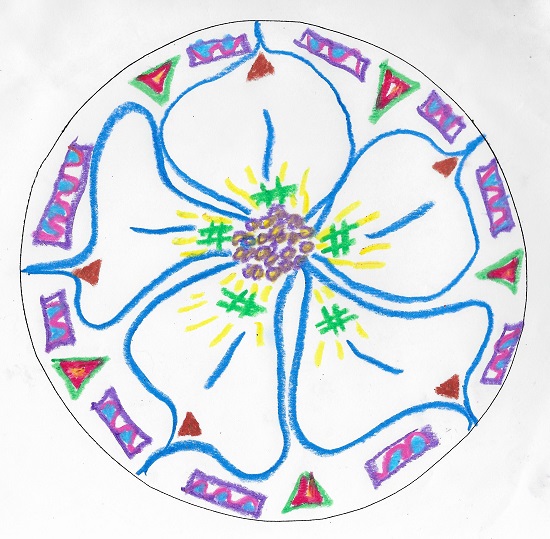
Mandala


Gently, patiently, but muscularly, I become aware of to what I am giving my attention.

I acknowledge the reality of what has my attention. It may be in the physical world or it may be a feeling, thought, image, or memory in my interior world. Without judgment, I simply name it.

If I am longing for substances, I strong-arm my attention.

I then use my attention to focus on what I am feeling, thinking, sensing, and doing.

I ask myself, “What am I feeling?”

I use my attention to become aware of my feelings and name them. I note the intensity of my feelings and adjust the volume on my inner state to a level that feels stable to me.

I ask myself, “What am I thinking?”

I become aware of my thoughts and, with mercy, acknowledge my thoughts without judgment.

Without judging each thought as good or bad, right or wrong, positive or negative, rational or irrational, I simply consider whether or not the thought would be helpful to me right now. I sort my thoughts into helpful and unhelpful piles.  I focus my attention on the helpful thoughts. I rank order my helpful thoughts and give my attention to the most important ones.

I ask myself, “What am I sensing?”

I become aware of physical sensations I am having and become aware of what information they give me. To help myself feel more comfortable and more stable, I consciously move or breathe. I shift my attention to information from my senses: to what I see, hear, taste, touch, sense, or to motion.

I ask myself, “What am I doing?”

I simply become aware of what actions I am taking, whether with my physical body or with my brain.

As a result of using my attention to become aware of my feelings, thoughts, and physical sensations,

I can then access the best of both my heart and my mind

which is my inner wisdom.

I can consult my inner wisdom to guide me in deciding what’s most helpful for me to say or do next – or not say or not do – with regard to myself and others.

. . . . .

When I become aware I am experiencing trauma symptoms, I have found this version of my inner dialogue  to be helpful.

This post is part of a series. The table of contents for the series is here and posts are published in the category entitled Guide.

Last updated 12/23/17

The views expressed are mine alone and do not necessarily reflect the positions of my employers, co-workers, clients, family members or friends. This content is for informational purposes only and is not a substitute for medical or professional advice. Consult a qualified health care professional for personalized medical and professional advice.

My Self-Care Guide to Helping Myself With Trauma

In 2007, I experienced school violence, a mass shooting, then school violence again. I am among the 15% predicted by research to develop post-traumatic stress disorder after community violence, and among the 5% of those anticipated to develop addiction.

Self-careWhile not all experiences of trauma result in post-traumatic stress disorder, those who experience trauma symptoms may find themselves:

  • alternating between feeling on guard, vigilant, wary, full of suspense, and distrustful, and then helpless, hopeless, and despairing
  • reacting quickly to words, actions or situations that may or may not be threatening
  • spiking quickly to intense feelings, including panic and rage
  • feeling flooded with feeling and unable to think
  • feeling intense feelings for longer than desired
  • having the sensation that one’s muscles and tissues are hardening to leather or stone
  • having trouble easing back to a steady state
  • having trouble choosing their behavior when they are full of feeling, finding themselves speaking and acting automatically, and possibly harming themselves or others
  • finding all the above happening more often than desired, in surprising settings, in surprising ways
  • having troubling thoughts out of nowhere, sometimes with extreme images suitable for a horror film
  • having troubled dreams or awakening from sleep in a startled state
  • having trouble getting over things, or getting through things, that might have seemed doable in the past
  • weighing the possibility of safety more heavily than the opportunity for growth or intimacy
  • distrusting everyone to avoid mistakenly trusting someone and risking re-injury, thus avoiding dangerous people but missing out on empowering, enriching people
  • withdrawing and isolating to limit exposure to the possibility of trauma-triggering situations and the anguish that results.

Working with a psychologist, and using my own training as a scholar and as a counselor, I engaged in personal study of the writing and research on trauma.  I learned these fundamentals about trauma:

As a result of trauma, my brain now functions differently than it did. That is a fact to acknowledge, a sadness to grieve, and a problem to solve, all at the same time.

I am either feeling alarm now, or am about to feel alarm. I may or may not be conscious of this sense of alarm, but that’s the major alteration that’s occurred in my brain as a result of trauma.

Upon discovering I am feeling alarmed, I may become alarmed. Alarm about alarm happens. Alarm triggers my brain’s survival instinct. Instinctual portions of my brain take over the pausing-to-think portions of my brain. I may not even be aware that I am fighting, fleeing, or freezing, even if it doesn’t help me or you, even if it hurts us both.

Sensory experience may be magnified. Tags in shirts may feel like bee stings. A bruise may feel like a fracture. Crackling from a package opening may sound like a nuclear explosion. Any and all non-threatening sights, sounds, and scents may alarm me.

I am not what happened to me. I have a new duality that I did not have before. I have an inner self, born with my personality and temperament, the pure essence of who I’ve always been. And I have a consciousness to which trauma happened, but which also contains my problem-solving and solution-executing skills and, therefore, my ability to make things happen for myself. I now have to have inner conversations with all these components, consulting all of them, appreciating all of them, and then deciding what to do based on what’s in the best interests of all of them – my whole self – trauma history and all.

My self-narrative can re-ignite and re-trigger trauma. What I tell myself about myself matters. At first, I am likely to not just hate what happened, but to hate myself. What I say to myself may further brutalize me. The essence of the blaming, punishing narrative that keeps destruction on-going is “How could you have let this happen to you?!”

Normal human hardships feel catastrophic. In every human life, conflict happens, illness happens, loss and death happen. After trauma, the brain can experience mild stress as alarming, and extreme stress as nearly unbearable.

Substances provide relief from all the above. And although it’s not logical, I can mentally pair abstaining from substances as causing all the above.

Trauma symptoms respond to care and kindness, not to willpower, confrontation, or reprimand.

In addition to professional care, self-care is the primary means of recovering from trauma.

Therefore, the essence of recovering from trauma is to help myself with alarm, all the while hanging on tight to myself, caring for myself, speaking kindly to myself, realistically protecting myself, and making decisions and taking actions that are helpful to my whole self and to my life, in the presence of a brain alteration that interferes intermittently and unpredictably with the whole process.

Oh, and if I have a co-occurring substance use disorder, I need to follow my treatment plan and abstain from problematic substances or engage in harm reduction.

“[T]he challenge in recovering from trauma is to learn to tolerate feeling what you feel and knowing what you know without becoming overwhelmed.”
Bessel van der Kolk, 2014

A daunting challenge! It can be done.

My Self-Care Guide to Helping Myself with Trauma

First, I have to help myself with alarm.

That requires safety first.

Alarm is an exquisitely evolved, heightened, natural response to threat. I don’t want to eliminate alarm, therefore, because it helps protect me from danger. I just want to help myself with the over-presence of alarm given to me by trauma. To decrease the likelihood of alarm, I need to secure as much safety, of several types, for myself as I can.

External safety

  • I keep myself with safe people, in safe situations, and in safe places. If I’m not safe, I leave. If I can’t leave, I start figuring out how I’m going to leave.
  • I used to be able to tolerate, even enjoy, a bit of risk and danger, a little living on the edge, but that’s not helpful to easing alarm. If things get edgy, I exit as soon as I can.
  • I used to enjoy the thrill of drama – in the news, in books, shows, movies, and YouTube videos. Today, drama triggers alarm so I  limit my exposure to real and fictional drama.
  • I know, and am beginning to accept, that I, unfortunately, can’t create perfect safety for myself. I am learning to tolerate “safe enough.”
  • I am learning the difference between discomfort and threat. I practice skills to handle discomfort and I remove myself from threat as soon as I can.

Internal safety

  • I protect my inner self from the aggressive words of others. I might listen to the words, but I keep a hand up between them and my inner self.
  • I protect my inner self from my own harsh thoughts. I know that trauma can result in self-blame, self-hatred, and harsh self-judgment. I work to become aware of those thoughts and catch them before they strike my inner self. I then accept, without judgment, that these are normal thoughts after trauma. I release them by shifting my attention to helpful thoughts. (I shift my attention. I don’t shame myself by denying, repressing, or suppressing my thoughts. The brain’s wonder is that it thinks thoughts! I simply shift my attention to my pre-sorted pile of helpful thoughts. And I don’t try to find “good,” “right,” or “positive” thoughts. Those are judgments, too, simply the opposite of naming thoughts as “bad,” “wrong,” and “negative.” Deciding what’s “helpful” asks for neutral discernment, rather than self-critical judgment.)
  • I protect my inner self from the “volume” on my inner experience when it ramps up too high or dials down too low.

Creating safety by guarding against replay

As a result of trauma, my brain automatically – without my awareness or consent – replays what happened, or automatically generate feelings, thoughts, or sensations associated with what happened, even though it’s not happening now. This replaying of the past can happen during waking hours, or during sleep, sometimes startling me awake. If I’m awakened, sometimes with my mouth wide in terror, I may or may not even be able to remember the dream.

In addition, just as a human being, I wish what happened had not happened. I naturally replay what happened, trying to find ways to try to have made the outcome different, or to try figure out what I did “wrong” so I can protect myself in the future.

The problem with replaying what happened, either consciously or unconsciously, is that it alarms me. Alarm reignites the portions of my brain inflamed by trauma. My brain, plus my natural human tendencies to want to right wrongs from the past, can give me painful, re-damaging, mini re-traumatizations all day long.

When thoughts or memories of trauma occur, I can assist myself by saying statements to myself like these:

  • I am becoming aware of all my feelings, thoughts, and physical sensations.
  • When I become aware of feelings or sensations of distress or discomfort, I gently ask myself, “Is this alarm?”
  • My normal tendency is to become alarmed about feeling alarmed, to criticize myself for my feelings, and to try to control and contain alarm. Today, first and simply, I note when I am feeling alarmed.
  • If I become aware of dire or troubling thoughts, I gently ask myself, “Are these thoughts from trauma?”
  • When I become aware of feeling alarmed or thinking thoughts associated with trauma, I use skills* to help ease my alarm and to help shift my attention to helpful thoughts.
  • As I become increasingly practiced and skilled, I’m able to say, “Ah, yes, alarm, there you are,” then, “Right here, right now, am I safe?” I’ll be able to say, “Ah, trauma, so sorry you’re there, but it’s just trauma.” With practice, my skills to ease my inner state and shift my attention will begin to kick in nearly automatically.

If others ask me to recall traumatic events from the past, especially for therapeutic purposes, I ask if they’re aware of the latest brain research on trauma. While “getting used to” trauma by reliving it (termed “desensitization” through “exposure therapy”) might seem logical, and it may have support in the research, because of what we we now know about trauma works in the brain, reliving past trauma may do more harm than good.

“Exposure-based therapies help patients with post-traumatic stress disorder (PTSD) to extinguish conditioned fear of trauma reminders. However, controlled laboratory studies indicate that PTSD patients do not extinguish conditioned fear as well as healthy controls, and exposure therapy has high failure and dropout rates.”
– Noble et al., 2017

From my one, precious little life, I can’t risk “failure” and “dropout” from a PTSD therapy back into PTSD. I must protect myself from such costly anguish for myself.

I ask the person to, step-by-step, justify why he or she thinks it would be valuable for me to re-experience trauma. I become aware of the state of my inner sense of alarm as I listen. If I can’t use my personal skills* sufficiently to ease my alarm, I decline.

“‘The underlying dynamic of so much abuse is coercive control, so pushing people to disclose can replicate those patterns of coercion’ and backfire, Dr. Wathen said.”
– Benedict Carey, More Than 150 Women Described Sexual Abuse by Lawrence Nassar. Will Their Testimony Help Them Heal?

Part of the problem with trauma is that the brain said, “No!” but the situation made “yes” happen. The inability to escape overpowers the brain and is experienced as a helpless, powerless state of despair. If another person, even with the best of intentions, in any way tries to use the power of his or her position or status to persuade or force someone to recall or share trauma – or uses overt or covert force to try to make a traumatized person do much of anything – even a mild sense of feeling coerced or overpowered can trigger alarm, thus reigniting trauma.

This is why the presence of negotiation in relationships – whether intimate, casual, or work-related – is crucial to people who have experienced trauma. While talking things through and making mutual decisions is a sign of health in all relationships, for people who have experienced trauma, it’s a must-have in order to feel safe enough, to manage alarm enough, to function.

In relationships, I might find myself over-identifying with vulnerable beings for whom I feel empathy for their wounds that seem like mine, or over-identifying with seemingly invulnerable beings whom I imagine, if they had magically been there, might have prevented from happening what happened to me. If I’m about to adopt a rescue animal or get involved with someone with known “issues,” I can ask a safe, trusted person to ask me gently, “Might trauma be leading you to over-identify with this being?” My answer might still be to move forward, but that can help me make sure that I am making my decisions, and that trauma is not making them for me.

Troublingly, I may also under-identify with vulnerable beings, distancing myself from the ache I feel for them through contempt and scorn. If I find myself being aggressive with words or actions towards animals, children, and other vulnerable beings, I need to stop myself immediately and get professional help. It’s not a surprising development from trauma, but it’s one I need to take seriously, and right away.

Caution with re-experiencing trauma for people with substance use disorders is an imperative. Two-thirds of people with substance use disorders have experienced trauma. The magnitude of trauma symptoms may overwhelm the capacity for new skills to handle them. Substances may be perceived as needed to provide their reliable, predictable relief from trauma symptoms. (This is why 12-step programs’ Step 4 requirement to do an inventory of the past can be endangering, resulting in a recurrence of trauma symptoms, possibly a return to use.)

Summary

The effects of trauma are real and can be measured in the body and identified in the brain.

However, if I can:

  • maintain an inner dialogue with myself, no matter what I feel, think, or sense, no matter what happens,
  • become aware, with self-kindness, of my feelings, thoughts, and physical sensations, in the moment, all the while not judging them,
  • use that data, pair it with my inner wisdom, and assess the safety of the situation right here, right now,
  • decide whether to remove myself from what is unsafe, or to stay and tolerate discomfort if I determine things are currently safe,
  • monitor my internal sense of safety, and continue to assess the current situation with strategic calm rather than alarm,
  • dial up or down the volume on my feelings to a range that feels stable to me,
  • sort thoughts and memories, as they occur, into helpful and unhelpful piles, and keep shifting, with a light touch, my attention from the unhelpful pile to the helpful pile – not because the thoughts and memories are wrong, not to deny what happened, only because some thoughts are more helpful than others,

I can ease trauma symptoms in the moment, and, over time, decrease the frequency and intensity with which trauma symptoms occur.

. . . . .

The experience of trauma transformed me. I probably can’t restore myself to the way I was or “get my life back.” Although I can’t know for sure, my experience of my life may always be lessened by sorrow. It’s so deeply unfortunate, but it’s just the way it is. Regardless, the research on trauma reveals that, with up-to-date professional care, and specific, skillful self-care, I can create an inner, transformative experience for myself that refashions my strengths. Even after trauma, with these newly wrought strengths, deliberate, determined use of my skills, and stubborn self-care, I can create a safe-enough, contented-enough, beautiful-enough life for myself.

. . . . .

*The clinical term for what I’m referring to as “skills” and “personal skills” is “emotion regulation skills” which I’ll describe more fully in other posts.

Sources, listed in order by simplicity and immediate helpfulness:

Babette Rothschild, 8 Keys to Safe Trauma Recovery: Take-Charge Strategies to Empower Your Healing, 2012

Matthew McKay, Jeffrey Wood, and Jeffrey Brantley, The Dialectical Behavior Therapy Skills Workbook: Practical DBT Exercises for Learning Mindfulness, Interpersonal Effectiveness, Emotion Regulation & Distress Tolerance, 2007

The Dialectical Behavior Therapy Skills Workbook for Bipolar Disorder: Using DBT to Regain Control of Your Emotions and Your Life, Sheri Van Dijk, 2009, especially pages 199-203

Donald Meichenbaum, Roadmap to Resilience: A Guide for Military, Trauma Victims and Their Families, 2012

Judith Herman, Trauma and Recovery: The Aftermath of Violence – from Domestic Abuse to Political Terror, 1997

Marsha Linehan, DBT Skills Training Handouts and Worksheets, Second Edition, 2014

Marsha Linehan, DBT Skills Training Manual, Second Edition, 2014

“Experience is not what happens to a man; it is what a man does with what happens to him.”
Aldous Huxley

“People may not have caused all their own problems, but they have to solve them anyway.”
Marsha Linehan

This post is part of a series. The table of contents for the series is here.

Last updated 2/9/18

The views expressed are mine alone and do not necessarily reflect the positions of my employers, co-workers, clients, family members or friends. This content is for informational purposes only and is not a substitute for medical or professional advice. Consult a qualified health care professional for personalized medical and professional advice.

Longing for Intimacy? Foster Interpersonal Safety First

A sense of interpersonal safety is a prerequisite for intimacy.

While popular notions of love and sex are goal-driven, i.e. commitment and penetration, a nuanced view offers so many more possibilities for enriching one’s own and one’s partner’s lives. If the “goal” is intimacy – and intimacy is where all possibilities begin – then the progression would look like this:

Safety > Attunement > Connection > Vulnerability > Intimacy

Attunement

For those seeking new romantic partners, or wishing to deepen their relationships with their current partners, intimacy, then, is a prerequisite for further emotional and sexual closeness. By looking at ways individuals contribute to creating a sense of interpersonal safety with others – and making safety-enhancing adjustments – they can increase the likelihood of fostering intimacy, that profoundly delightful, very human need.

“[E]ven though physical release may be involved, loving sex is a cherishing of each other’s minds, hearts and bodies – the whole person that is our partner.”
– John and Julie Gottman

So, safety first.

What helps create and maintain a sense of interpersonal safety? What harms a sense of safety?

Helps: Self-control as evidenced by courtesy and politeness in speaking and manner.

Hurts: Lack of self-control as evidenced by non sequiturs in speaking and manner that jar social norms or conversations. (“What an interesting conversationalist! But can I count on this person to be stable when the going gets tough?”)

Helps: Self-acceptance as evidenced by statements indicative of self-fairness.

Hurts: Self-judgment belied by self-shaming statements disguised as self-effacement. (“Uh-oh! When will it be my turn to be humiliated by that ‘humility’?”)

Helps: Humor that joins.

Hurts: Humor that separates by criticizing self, others, or institutions. (“Yikes! If they make fun of themselves/others/society, when will it be my turn to be the butt of the joke?!”)

Helps: Transparency, authenticity, clarity.

Hurts: Secretiveness, evasiveness, cleverness. (“Uh-oh! What problems are they hiding that might end up causing me pain?!”)

Helps: Present, mutual, lateral, reciprocal communication.

Hurts: Distractedness vs. attentiveness; “one-up” or “one-down” postures; leaning too far in or too far back; over-use or under-use of “air time.”

Helps: “I-statements.”

Hurts: “You-statements” that define the other person, and “we-statements” that include the other person, without permission.

Helps: Ability to read “closeness” cues and to adjust the dial on congeniality and assertiveness up or down.

Hurts: Insistence on making a point. Choosing “right” on the continuum of “Do you want to be right or do you want to be close?”

Helps: Physical self-care as evidenced by grooming and body morphology.

Hurts: Persistence in unhealthy behavior that endangers the self. (“Wow, they don’t seem to be taking very good care of themselves. I’m pretty independent, but I need help sometimes. Will they be able to care for me when I need a turn?”)

Interpersonal communication styles will vary, of course, but if intimacy is the goal, safety will always matter first.

Art by Caleb Flood

. . . .

This post is an excerpt from materials for Love and Sex After 50, a course I’ll be teaching for the Lifelong Learning Institute at Virginia Tech in Blacksburg, Virginia, in February, 2018. More about the course is here.

Last updated 11/18/17

The views expressed are mine alone and do not necessarily reflect the positions of my employers, co-workers, clients, family members or friends. This content is for informational purposes only and is not a substitute for medical or professional advice. Consult a qualified health care professional for personalized medical and professional advice.