Addiction Recovery: Realities and Possibilities

The goal of an evidence-based treatment plan for the medical illness of addiction would be to assist individuals in living healthy, functional lives, in connection with others, such that substance use does not result in negative consequences for themselves, others, or society.
A glass half fullHowever, society’s primary measure of recovery from addiction – and its measure of merit to receive continued treatment for addiction – is negative urine drug screens for illicit and non-prescribed substances. Secondarily, society measures addiction recovery progress in terms of reduced contact with 1) the criminal justice system, 2) emergency health care services, 3) child protective services, and 4) social services programs.

Achievement of legal negative urine drug screens requires abstaining from illicit and non-prescribed substances. (The illogic and injustice of citizens with a medical illness being required to prove they are asymptomatic of that illness to receive treatment for it is beyond the scope of this post.)

After medical care for the medical condition of addiction, this is what research suggests helps most people, most of the time, better than other ways, and better than nothing, to increase the likelihood of abstaining from substances:

Maintain a state of stability: physically, emotionally, cognitively, relationally, spatially, geographically, financially. Practice on-going awareness and, if any factors become unstable, adjust until they’re stable again.

Regulate emotions. Without judging feelings, adjust the “volume” on the intensity to a stable state while providing self-acceptance, self-reassurance, and self-soothing.

Sort thoughts, without judging them, into the categories of “helpful” and “unhelpful.” Focus on the “helpful” thoughts. Recognize and accept that opposing thoughts – for example, “I want to use” AND “I don’t want to use” – may both be true.

Consult your inner wisdom, your “Wise Mind.” Having given your attention to the truth of what you’re feeling, thinking, and sensing, what is your inner wisdom’s guidance?

Manage attention. Become aware and stay aware. Monitor your needs and wants. If you can become aware, in the moment, of what you are giving your attention to, what you are feeling, what you are thinking, and what physical sensations you are experiencing – and do so without judgment and without alarm – you can use this information to help yourself decide what would be most helpful for you to say or do next – or not say or not do.

Monitor environmental cues. Limit or eliminate exposure to items, individuals, locations, and situations that may produce a longing to return to use.

In addition:

Over time, identify the purpose and meaning of substances and substance use in your life.

Over time – acknowledging that no one source, perhaps even combinations of sources, might ever equal the complete experience substances offered – identify possible practices, activities, and conditions that might serve in place of substances.

Do research, consult with others, and discover evidence-based, therapeutic modalities recommended for any mental illness you might have. Help yourself with any trauma you may have experienced. Do self-paced therapeutic exercises, or receive counseling for that particular disorder. Examples: cognitive behavior therapy for depression; dialectical behavior therapy for bipolar disorder.

Attune to yourself, learn your preferences, and attach to yourself.

Attune to others to increase the possibility of connection, closeness, attachment, and bonding.

. . . . .

Here is a shortened version of this post as a printable handout. (.pdf opens in a new tab.)

This post is part of a series on evidence-informed self-care for addiction. Self-care is NOT an evidence-based treatment for addiction. However, when treatment is scarce or denied, people with addiction must take treatment matters into their own hands. The introduction and table of contents are here and posts are published in the category entitled Guide.

The views expressed are mine alone and do not necessarily reflect the positions of my employers, co-workers, clients, family members or friends. This content is for informational purposes only and is not a substitute for medical or professional advice. Consult a qualified health care professional for personalized medical and professional advice.
When Replacing Substances, Good Enough Will Have to Do

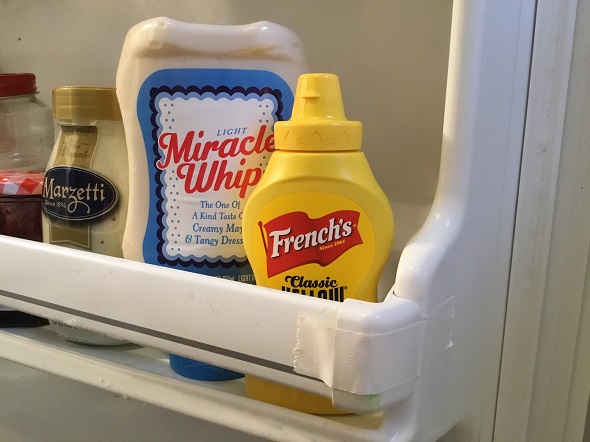
When the rung on the bottom shelf of my refrigerator broke, I bought a roll of white duct tape and, as carefully as I could, cut short lengths of duct tape to hold it back in place. I will not win a repair design contest. It’s not “good as new.” The shelf can no longer hold heavy items. But I treasure sandwiches for lunch. Plastic jars of yellow mustard and light mayo reside there reliably. Good enough will do.

Good enough will do

Similarly, if I need to abstain from problematic substances, if I can figure out what purposes substances served for me – what needs and wants they filled for me – I might be able to find replacements for them. Since addiction is a brain condition requiring medical care, this effort is unlikely to have a direct, immediate effect on my brain’s functioning. Figuring out the needs and wants that substances assisted me with may not cover the full scope of, or explanation for, my initial or repeated substance use prior to developing addiction. But understanding what substances did for me may help me with my self-care efforts.

Since substances can magnify experience beyond what the brain naturally experiences, I’m unlikely to find identical, snap-in substitutes. Given the interrelated neurocircuitry of love and addiction, this reality creates a deep loss to grieve. While no analogy is perfect, the idea of finding good-enough, duct tape-like replacements might be helpful.

What did substances do for me? Answering that question feels overwhelming! But analyzing my last return to use may help get me started. Let’s break it down.

First, here’s the usual information to gather when seeking self-understanding:

What was I giving my attention to, what was I feeling, what was I thinking, and what physical sensations did I experience?

Many people cannot remember what they were feeling and thinking just prior to use, so that data is usually missing.

Let’s try different time frames – 24 hours, 1 week, 1 month.

Answering these questions might be useful:

1. ATTENTION:  What was getting – perhaps splitting – my attention prior to my last return to use? 24 hours before? 1 week before? 1 month before?

2. FEELINGS: What was I feeling prior to my last return to use? 24 hours before? 1 week before? 1 month before?

3. THOUGHTS: What was I thinking prior to my last return to use? 24 hours before? 1 week before? 1 month before?

4. PHYSICAL SENSATIONS:  What physical sensations was I experiencing prior to my last return to use? 24 hours before? 1 week before? 1 month before?

5. AWARENESS OF NEEDS AND WANTS THEN: Having become aware of 1) what I was giving my attention to, 2) what I was feeling, 3) what I was thinking, and 4) what physical sensations I was experiencing, what needs and wants did I seem to have prior to my last return to use? 24 hours before? 1 week before? 1 month before?

6. SELF-KINDNESS AND SELF-CARE: AWARENESS OF NEEDS AND WANTS NOW: What needs and wants do I have now? What might I do to kindly and supportively help myself meet these needs and fulfill these wants?

7. What insights have I had as a result of doing this exercise?

8. In what ways can I continue to customize and individualize my treatment plan to help get my needs and wants met? Some good-enough, duct tape-like replacements, perhaps, may decrease the likelihood of my return to use.

The idea is this: If I can become aware, in the moment, that I have unmet needs and wants, strong feelings, intense thoughts, or physical sensations similar to those I experienced prior to past returns to use, I might be able to help myself with them without substances.

. . . . .

Here is a version of this post in the form of a printable handout. (.pdf opens in a new tab.)

If different substances served different needs, printing out multiple copies of the handout and answering the questions for one substance at a time might be helpful.

Last revised 12/7/17

This post is part of a series on evidence-informed self-care for addiction. Self-care is NOT an evidence-based treatment for addiction. The introduction and table of contents are here and posts are published in the category entitled Guide.

The views expressed are mine alone and do not necessarily reflect the positions of my employers, co-workers, clients, family members or friends. This content is for informational purposes only and is not a substitute for medical or professional advice. Consult a qualified health care professional for personalized medical and professional advice.

About Abstaining

Rightly or wrongly, society wants people with substance use disorders to abstain.

Many factors interfere with abstaining from substances.

Art by Jesi Pace-BerkeleyAddiction is a brain condition, not a moral or criminal one. What an individual is supposed to do with his or her brain to abstain right here, right now, is unknowable. For most individuals and scientists alike, the brain is a black box of mystery.

Substances serve purposes. When the substances are absent, the purposes aren’t served. This absence is experienced as stress, distress, and suffering.

Humans need social connection to survive and thrive. Due to the brain’s automaticity with regard to environmental cues, abstaining usually requires cutting oneself off from anyone or anything that may trigger a return to use. Isolation is experienced as pain.

The brain has evolved to withdraw the being it inhabits from pain. Abstinence requires fighting the brain’s automatic function to relieve pain by returning to substances.

Negative consequences don’t work. Punishing an individual with negative consequences for returning to use – or an individual on his or her own trying to fear negative consequences to prevent a return to use – doesn’t work. That’s because the primary symptom of addiction is the brain’s drive to return to use despite negative consequences.

Addiction is a chronic illness. Who wants to chronically treat a chronic illness? Most people with chronic illnesses drop out of treatment, even quit filling their prescriptions for meds, and their symptoms return.

Humans naturally, normally, wondrously seek pleasure and avoid pain. Denying oneself substances can feel like self-inhumanity.

In sum, for people with acute substance use disorders, abstaining is nearly impossible, especially long-term. Relapse rates can be are high, similar to those for other chronic conditions. People with substance use disorders can be considered to be at risk for 5 years.

(Note that I didn’t even mention physical withdrawal from substance dependence. A mere annoyance compared to the anguish of the other factors.)

What tools can be helpful to people who need or want to abstain?

  • Stop putting energy into things that, according to research, don’t work for most people, most of the time, better than other treatments, better than no treatment.
  • Other than some medications for some substance use disorders, shrug your shoulders and accept that what directly results in abstinence is unknown. Indirect, imperfect means are all we know to try.
  • Use periods of successful abstinence to attempt to identify, personally and individually, what did work for you.
  • Jettison this punishing mindset: “I must make myself not use.” Research suggests that direct attempts are very unlikely to work, even help.
  • Adopt this generous mindset: “I can help myself not use.” Research offers a bounty of possibilities for practices that can, however indirectly and imperfectly, help people not use.
  • Learn additional methods and practices that help people abstain, experimentand find the ones that work for you.

Art by Jesi Pace-Berkeley

This post is part of a series on evidence-informed self-care for addiction. Self-care is NOT an evidence-based treatment for addiction. The introduction and table of contents are here and posts are published in the category entitled Guide.

The views expressed are mine alone and do not necessarily reflect the positions of my employers, co-workers, clients, family members or friends. This content is for informational purposes only and is not a substitute for medical or professional advice. Consult a qualified health care professional for personalized medical and professional advice.
Tapering In Replacements for Substances

Ideally, a person with substance use disorder, as part of an evidence-informed treatment plan, would be assisted with tapering in a combination of activities and practices that are approximations of what substances did for a person, while tapering out substances that have become problematic. The intention would be to seek and maintain a steady state of well-being.

Wonders can come together at one time

That process would take several steps:

  1. Identify the purpose and meaning of the use of substances for the individual, whether frequently or infrequently, whether alone or with others.
  2. Identify one’s individual strengths, interests, and preferences.
  3. Over time – acknowledging that no one source, perhaps even combinations of sources, might ever equal the complete experience substances offered – identify possible practices, activities, and conditions that might serve as replacements, however approximately, for substances and their use.
  4. Use knowledge of one’s strengths and preferences to experiment with a variety of practices, activities and conditions that might by helpful to the individual. Become aware of feelings, thoughts, physical sensations, and attention and use them as feedback to monitor stability.
  5. Adjust. Keep, and possibly expand, what helps with steadiness. Jettison what doesn’t. Maintain a list of future possibilities to try.

Unfortunately, most people with substance use disorder are mandated to abstinence. What the substances did is no longer being done. This can throw – even slam – people into instability.

“Do not attempt to take away a person’s main means of trying to cope with pain and suffering until you have another effective coping strategy in place.”
– Alan Marlatt, Ph.D., 2004

As a person with substance use disorder, then, as quickly and efficiently as I can, I need to try to figure out a few things that substances did for me, note a couple of my strengths, try to become aware of some preferences, then create a short list of things that might possibly serve in the place of substances for me individually, and then use my strengths to try to make those things happen.

Here’s a brief version of this post as a printable worksheet entitled A Look at the Purposes of Substances and What Might Replace Them (.pdf opens in new tab).

Purposes of Substances and Substance Use

What do I think substances, or use of substances, did for me?

_____ Enjoyment, pleasure, reward
_____ Relief from emotional pain
_____ Relief from physical pain
_____ Relief from existential despair, i.e. a helpless, hopeless feeling from not knowing if your life has meaning or if anything matters
_____ Relief from strong feeling states: anger, frustration, sorrow, agitation
_____ Relief from worry
_____ Relief from social anxiety
_____ Relief from anxiety
_____ Relief from depression
_____ Relief from racing or disturbing thoughts
_____ Relief from bad memories: trauma, neglect, abuse, witnessing violations against others
_____ Relief from grief and loss
_____ Relief from boredom
_____ Release from isolation and loneliness
_____ Sense of absence or escape
_____ Sense of protection
_____ Sense of belonging, being a part of, fitting in, or being accepted
_____ Sense of love and comfort

Now, let me rank order the top three, or more if I choose, by placing a “1” by the most important, a “2” by the next most important, etc.

What were the top three purposes served by substances and/or substance use for me?

1) ______________________
2) ______________________
3) ______________________

What insights did I gain from thinking about the purposes and meanings of substance use for me?

Strengths

People with substance use disorder often don’t feel very good, or feel very good about themselves. Instead of thinking of myself as either good or bad, let me suspend judgment for a moment. Let take a look at myself with objectivity and kindness.

If I see some traits I don’t like, for now, I simply shift my attention away from those thoughts, and look again for my strengths.

If I’m having trouble, I can remember the praise others have given me and name the strengths they saw in me.

If I’m doing this exercise right now, even if I don’t really want to, that’s the strength of discernment. I  might be penalized by an authority or someone I care about if I don’t take a look at these things. Discernment includes the strength of telling the difference between what’s helpful and what’s not helpful.

What other strengths do I have?

_____ Courage

_____ Creativity

_____ Kindness

_____ Generosity

_____ Problem-solving

_____ Determination

_____ Perseverance

_____ Honesty

_____ Fairness

_____ Leadership

_____ Love of learning

_____ Forgiveness

_____ Humor

_____ Teamwork

_____ Appreciation of beauty

_____ Empathy

_____ Awareness

From this list, what do I think are my top three strengths?

1) ______________________
2) ______________________
3) ______________________

Interests and Preferences

What are three activities that I like doing, or used to like doing?

1) ______________________
2) ______________________
3) ______________________

Where are three places I like to be with people, or don’t mind being with people?

1) ______________________
2) ______________________
3) ______________________

Preferences for Self-Care

According to research, medications are the first line of treatment for longings, urges, and cravings that accompany deprivation from substances in people with substance use disorder. Research is inconclusive about self-care behaviors (SCBs) that can assist with abstinence. Some studies suggest that the practices listed below may be helpful.

Which of the following activities, practices, or situations might be potentially helpful to me?

_____ Exercise
_____ Sleep hygiene: managing sleep time/wake time/length of sleep
_____ Managing caffeine intake and timing
_____ Managing nicotine intake and timing
_____ Managing quality, quantity, and timing of meals and snacks
_____ Engaging in focused breathing or breathing patterns
_____ Engaging the senses: see, hear, taste, touch, smell, motion
_____ Engaging in focused activities, such as cooking using a recipe, doing a repair, drawing, painting or coloring, playing a game, working a puzzle, journaling
_____ Engaging in social gatherings and activities that foster social connection

Which of these self-care behaviors is already a strength for me?

____________________

Which one, with a very small change, might move it up to tie with my top self-care behavior?

____________________

What would that small change be?

____________________

Replacement Preferences

I identified the top three purposes served by substances and/or substance use for me. They are normal, human, understandable needs. What might, even minimally, for me, serve in their places?

Enjoyment, pleasure, reward ____________________
Relief from emotional pain ____________________
Relief from physical pain ____________________
Relief from existential despair ____________________
Relief from strong feeling states ____________________
Relief from worry ____________________
Relief from social anxiety ____________________
Relief from anxiety ____________________
Relief from depression ____________________
Relief from racing or disturbing thoughts ____________________
Relief from bad memories ____________________
Relief from grief and loss ____________________
Relief from boredom ____________________
Release from isolation and loneliness ____________________
Sense of absence or escape ____________________
Sense of protection ____________________
Sense of belonging ____________________
Sense of love and comfort ____________________

What’s Next?

Based on what I’ve discovered about what substances and substance use did for me, what my strengths and preferences are, and what research suggests is helpful to people who are trying to abstain, with the intention of increasing my sense of stability and well-being, what are three things I might be able try this week in place of substances?

1) ______________________
2) ______________________
3) ______________________

What is the smallest, gentlest step I might be able to take on my own to help myself try to make one of these things possible?

A small step I might be able to take is:

____________________________________________
____________________________________________
____________________________________________.

“It’s my life. Don’t you forget.”
– “Talk, Talk,” The Music Machine

This post is part of a series.

The table of contents for the series is here and posts are published in the category entitled Guide.

The views expressed are mine alone and do not necessarily reflect the positions of my employers, co-workers, clients, family members or friends. This content is for informational purposes only and is not a substitute for medical or professional advice. Consult a qualified health care professional for personalized medical and professional advice.

People with Addiction Must Take Treatment Matters Into Their Own Hands

A lot of people with substance use disorder (SUD) – popularly termed “addiction” – stop using substances on their own, a few stop through 12-step recovery, and many successfully practice harm reduction. The rest of us have to scramble.

Before 2016, no research-backed guide to substance use disorder treatment existed. Once the Surgeon General’s report, Facing Addiction in America, was published in November, 2016, however, most* of the data about what works and what doesn’t is now available to the public. What that means, though, is that many people living with addiction today have been incorrectly treated, even maltreated, for decades, resulting in acute, seemingly intractable cases.

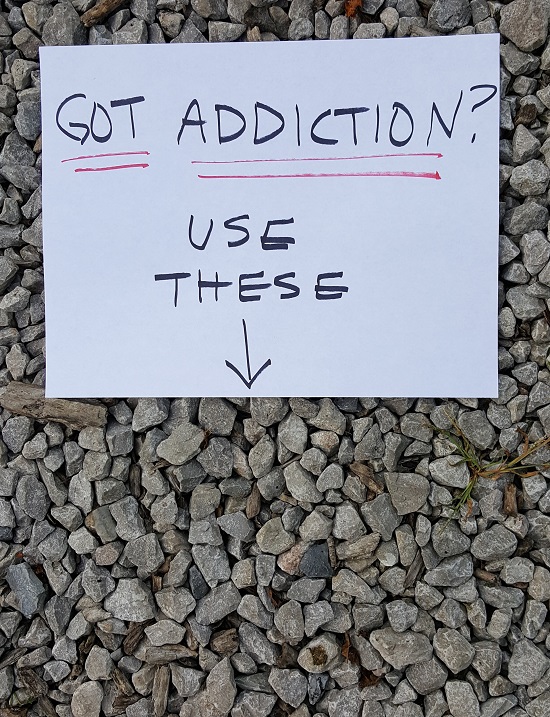
We treat addiction with Stone Age tools.Based on my fierce and determined study of the 400+ pages of the Surgeon General’s report, research for our literature reviews, and secondary sources that cite research, I outlined an initial, evidence-informed treatment plan for substance use disorder. I expanded that outline for clinicians who assist people with alcohol use disorder.

Logically, then, if I have substance use disorder, and can receive evidence-informed treatment from medical professionals and other trained health care professionals, I should be able to abstain from problematic substances, be able to use legal and prescribed substances in non-problematic ways, or engage successfully in harm reduction, right?

Realities trump logic.

  • Substance use disorder treatment is hard to find in America, especially in rural areas. If treatment is available, many people don’t have health insurance to cover it, or their policies have limited coverage for addiction treatment, including medications. Expenses can be beyond the means of many people.
  • Evidence-informed substance use disorder treatment is hard to find in America, period. Many treatment facilities still use a 12-step model which does not, according to research, result in abstinence for most people, most of the time.
  • Whether evidence-based or not, where affordable or subsidized addiction treatment is available, wait lists are long.
  • Abstinence is required to remain in treatment for the illness of addiction, yet inability to abstain is the symptom of the illness.

Although addiction is a medical condition, it is considered a moral and criminal one. People with the medical condition of addiction have lost their jobs, lost their kids, lost their licenses, even lost their freedom through incarceration.

Society’s primary measure of achievement of recovery from substance use disorder is negative urine drug screens for illicit and non-prescribed substances. Secondarily, society requires reduced contact with 1) the criminal justice system, 2) emergency health care services, and 3) child protective services.

Achievement of legal negative urine drug screens requires abstaining from illicit and non-prescribed substances. However, the National Institute on Drug Abuse (NIDA), a division of the National Institutes of Health (NIH), states, “Addiction is a chronic, relapsing brain disease that is characterized by compulsive drug seeking and use, despite harmful consequences.”

If my survival instinct, willpower, abilities to choose or decide could have kicked in, they would have. I would be abstaining. I would “piss clean.” I have experienced extensive, significant, harmful consequences, as have others, as a result of my continued substance use. Continuing to use doesn’t make sense to me or to others. But according to the definition of addiction, my repeated behavior wouldn’t be about sense, logic, or reason. It is about malfunctions in the brain.

Let me see if I’ve got all this.

I have a medical illness of the organ of the brain. I can get limited or no medical care for it. The primary symptom of the illness is repeating a behavior. I am expected to, on demand, right now, not display the symptom of the illness in order to prove I’m healing from it.

That’s a diabolical, no-win, Catch-22gaslighting, crazymaking, double bind.

And it’s a malfunctioning view of addiction. In the Philippines, they shoot their people with addiction. About that, our president said, “Great job.”

In the short-term, I just don’t see anything to do about society’s views, or about federal law, state law, insurance company policy, and/or medical board policy that restrict treatment for addiction.

Dogs put in horrible experiments where they couldn’t avoid electric shocks just laid down helplessly.

No! Not us!

If people with substance use disorder – of which I am one – want to get and keep jobs, stay out of jail, and get our kids back, the only solution I see is to take treatment matters into our own hands.

In my estimation, help is not on the way.

What we need is a guide to do-it-yourself, evidence-informed, addiction treatment.

The primary problem with that approach is this:

“A substance use disorder is a medical illness characterized by clinically significant impairments in health, social function, and voluntary control over substance use.”
Facing Addiction in America: The Surgeon General’s Report on Alcohol, Drugs, and Health, November, 2016, Page 4-1

Medical illnesses need medical care. Since most of us are not medical professionals, nor ethically able to treat ourselves if we were, our first priority needs to be to figure out how to get medical care for ourselves, or to get on wait lists to receive it.

In a modern, industrialized country, taking health care treatment matters into our own hands might seem radical and revolutionary. It should be unnecessary. But the current state of addiction treatment in the U.S. creates a third-world nation of deprivation, a post-apocalyptic, Stone Age realm in which people must use the tools at hand to fashion their own survival. Luckily, thanks to advocates like Maia, Vivek, and others, we don’t have to rely on word-of-mouth folk wisdom, rocks and twigs. Advanced, evidence-based tools are at hand.

In low-income countries, lay people help each other with health issues all the time. Nora Volkow, M.D., Director of NIDA, advocates for crowdsourcing addiction treatment. Virtual assistance (telemedicine) with addiction care is on the horizon.

All right, then. Let’s help each other. Let’s create a guide to evidence-informed, do-it-yourself, addiction treatment.

*most of the information in the Surgeon General’s report:

  1. Our literature review concludes that Twelve-Step Facilitation, TSF, is not an evidence-based addiction treatment protocol.
  2. We challenge ranking naltrexone with methadone and buprenorphine as first line treatment for opioid use disorder, rather than listing it as an alternative.
  3. We assert that the evidence does not support rehab as an effective protocol for achieving abstinence.

Last updated 12/31/17

This post is part of a series.

The table of contents for the series is here and posts are published in the category entitled Guide.

The views expressed are mine alone and do not necessarily reflect the positions of my employers, co-workers, clients, family members or friends. This content is for informational purposes only and is not a substitute for medical or professional advice. Consult a qualified health care professional for personalized medical and professional advice.