My Guiding Principles as a Counselor for People with SUDs

“A substance use disorder is a medical illness characterized by clinically significant impairments in health, social function, and voluntary control over substance use.”
Facing Addiction in America: The Surgeon General’s Report on Alcohol, Drugs and Health, November, 2016, Page 4-1

“Addiction is a chronic, relapsing brain disease that is characterized by compulsive drug seeking and use, despite harmful consequences.”
National Institute on Drug Abuse (NIDA), a division of the National Institutes of Health (NIH), 2014
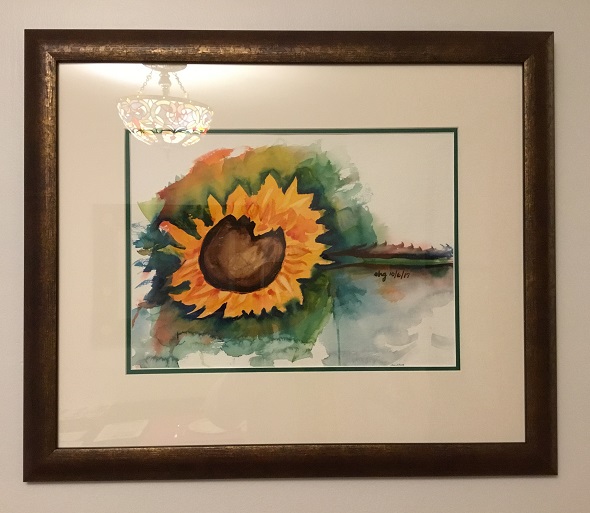
Painting of a sunflower

Do no harm.

Use evidence-based treatment modalities.

I define evidence-based treatment as what research reports works for most people, most of the time, better than other treatments, and better than no treatment. Specifically, that means the treatment is supported by numerous, peer-reviewed scientific experiments with rigorous methods that include control groups, randomization of subjects to experimental conditions, and bias-free samples, with statistically significant results. Some treatments that are evidence-based to work for groups may not be helpful to a particular individual, however. It is an imperative that counselors and individuals continually monitor an individual’s condition and progress while engaged in treatment.

I contrast research data – the evidence resulting from research experiments – with “anecdotal data.” I define anecdotal data as an individual’s personal experience. Data from a sample size of one does not provide sufficient information from which a generalization can be made about a group or population. Principles believed to account for outcomes from inspirational individual stories, practitioner wisdom, or theories based on logic, cannot be safely applied to others without first subjecting those principles to rigorous research.

I have relentlessly studied what evidence-based substance use disorder treatment should be. An outline of my findings is here.

Provide the caliber of therapy and treatment you would want for your own child.

Champion the power and resilience of the individual.

Jettison all identity-compromising, stigma-perpetuating words and phrases from one’s vocabulary: addict, alcoholic, substance abuse, get clean, dirty urine, hit bottom, tough love, codependency, enabling.

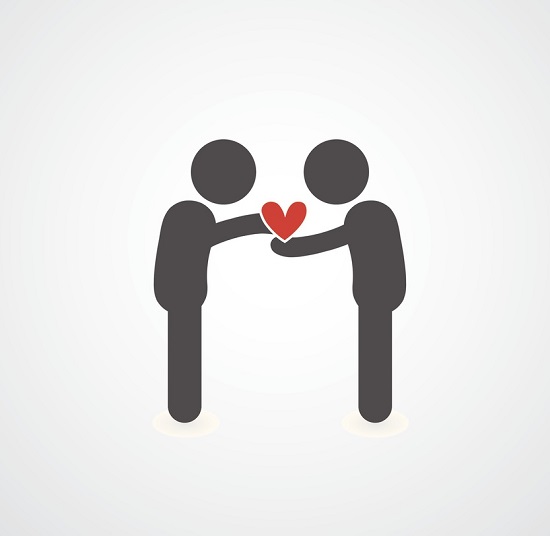
Practice “love love,” not”tough love.”
I Can’t Get You Treatment for Opioid Addiction in My Town

Let’s suppose that, against all the odds against it, and due to the likely trauma that preceded it, unfortunate mental illness that accompanied it, and financial and social misery that predisposed you to it, you develop an addiction to prescription pain pills.

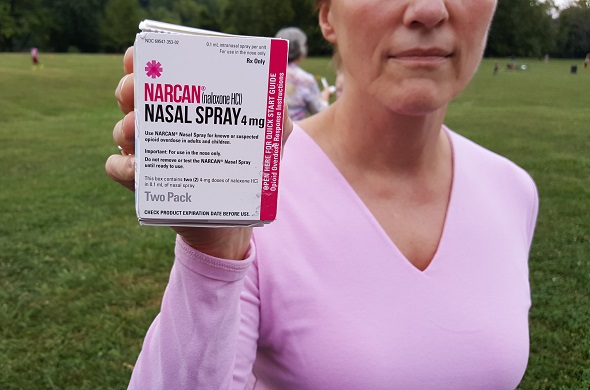
I keep Narcan in my purse in case fellow citizens need help

I keep Narcan in my purse in case fellow citizens need help.

If you are addicted to pain pills, you’re likely to be among the 75% of  Americans who got the pills from a friend or family member, not from your doctor. Your brain has learned that they uniquely do what needs to be done for you, in ways that are unique to you, such that a turn happens  – still a black box of mystery in the brain, even to neuroscientists – and you realize you can’t stop taking the pills. And you’re experiencing negative consequences from continuing to take them. Let’s stretch the odds even further – perhaps you’ve even ended up injecting heroin.

My name is out there as someone to call. Let’s say you call me and say, “Anne, I have a problem with opioids. I’m ready to stop right now. Can you help me?”

If you stop now, I have just under 12 hours to get you help before you start going into withdrawal. Withdrawal is “uncomfortable,” not fatal? Try unremitting vomiting and diarrhea for 48 hours or more and see if you survive.

I’m a Virginia Tech Hokie, and a Good Samaritan, and an American. We don’t let our people suffer like that.

The top two treatments known to cut the death rate by half or more for opioid use disorder are methadone and  buprenorphine. Buprenorphine is commonly known by the brand name Suboxone.

Started on either one, ASAP, under medical supervision, with additional medications for symptoms and other conditions you might have, you can go through withdrawal and continue with this life-saving treatment.

In our town, I can’t get you methadone or buprenorphine, the top, evidence-based treatments for opioid use disorder.

Although research-backed to result in decreased social costs compared to abstinence-based treatments, methadone has been tied up in federal legislation for decades and can only be administered at a federally regulated clinic. A prescient local doctor tried to open a methadone clinic in 2006 in Blacksburg and was shut down. A need for evidence-based treatment for opioid use disorder has existed here a long, long time.

But buprenorphine can be dispensed at pharmacies, so you should be able to get a prescription from your primary care physician, right?

Federal law requires that physicians be certified to prescribe buprenorphine. They’re permitted to treat only 275 patients at a time. What that means is that you have to get in line behind every one else. Wait lists in our area are 6 months or more. In some rural areas, wait lists are a year.

If you can pay $500 cash for the first visit, and $180 per month after that – and, if insurance doesn’t cover it, an additional several hundred dollars per month for a prescription for buprenorphine – you may be able to be seen in one to two weeks at a local addictions medicine clinic that doesn’t take insurance.

So where does that leave us if you call me and ask me for help? I can’t get you methadone today or maybe ever, locally.

I can’t get you buprenorphine either. Even if I take you to the ER, they won’t administer it or prescribe it. I might be able to help you get into the private clinic in a few days, or on a 6-month or more wait list at a social services agency, although there are lots of hoops to jump through to get on a wait list, or to stay on it.

I can’t keep you stable or introduce you to treatment at a safe injection site because we don’t have any.

What if this scenario weren’t about you, but about your child? Let’s say he or she has an opioid use disorder. What can you and I do for that child right here, right now, in Montgomery County, Virginia?

We can call the two closest rehabs, one 45 minutes away, the other an hour and a half, and see if they have beds available in the next 12 hours. (Evidence is inconclusive on the efficacy of rehab.) However, administering buprenorphine at either facility is non-standard and occurs on a case-by-case basis. Patients administered buprenorphine are tapered before they leave. That puts them at an 80% chance of relapse. The barest minimum recommended time to be on buprenorphine is one year. Many people with opioid use disorder need to be on maintenance medications for life, just like many people with diabetes need to be on insulin for life.

Abstinence is not a treatment for substance use disorders.

Addiction is a medical problem requiring medical care. When your children with opioid use disorder leave rehab without medication, they’re not receiving treatment for it. Because their tolerances have dropped, they are at high risk of not only relapsing, but overdosing and dying.

Other than trying to find a rehab bed for your children, there’s nothing you or I can do to help your child stop using opioids right now.

Nothing legal, anyway. Can you imagine being a parent and saying to your child, “Keep using, honey. Keep swallowing pills into that precious body I held close to my own body when you were a baby. Keep breathing that substance in. Since you were tiny, I’ve watched to make sure you were still breathing while you slept. Keep injecting into your precious arm or hand or thigh. You might die if you don’t.” Or, “Honey, do you know someone on Suboxone that we could buy it from? Just until we can get you to a doctor?”

This is called the Heinz dilemma, used in ethics classes everywhere, to show the misery of two miserable choices. Should Heinz have broken into the pharmacy to steal the medication that would save his dying wife’s life?

Why did emergency department visits involving misuse or abuse of prescription opioids increase 153% between 2004 and 2011? Why did emergency room visits related to alcohol increase 50% in the past decade?

Why are people going to the emergency room for substance use disorder, a treatable, chronic illness for which medical care should begin with a visit to one’s primary care physician, according to the Surgeon General’s report, released in November of last year?

Emergency rooms are filled with people who have opioid use disorders, alcohol use disorders, and other substance use disorders because we limit access to readily-available, evidence-based treatment. They shouldn’t be in the ER at all. They should have received treatment long before things went that far wrong.

What’s a citizen to do in a town, in a state, in a country that declares a medical emergency but won’t let its people have the medicine to treat the medical condition?

I’ve been asked to answer the question, “What can we do about the “opioid epidemic”? I share with you my opinions.

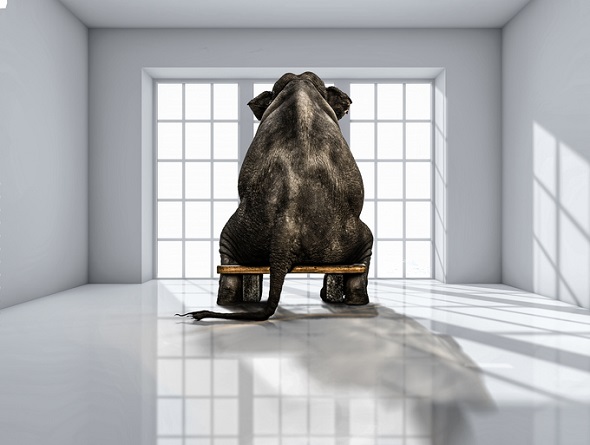
  • Look around for elephants in every room. Even if you can’t see them, consider whether or not they might be there. If you see them, name them. Replace them with data.
  • Demand definitions of terms. If politicians or policymakers use the term “opioid epidemic” or “opioid crisis,” ask “How do you define ‘epidemic’?” and “How do you define ‘crisis’?” Ask, “To which opioids are you referring?”
  • Jettison these words from your vocabulary: addict, alcoholic, drug “abuse,” addictive personality, codependency, enabling, hit bottom, get clean, tough love. We are people who happen to have the medical condition of addiction. If you love us, help us. Period.
  • Say nothing about addiction that you can’t support with data. If you believe something to be true, but don’t know if it’s true or not, either identify it as an opinion, or don’t say it. Personal opinions about cancer, diabetes or addiction, – all dangerous conditions that result in premature death – can kill.
  • Demand data. Insist on sources. Don’t accept hype, opinion, belief, or personal experience as data.
  • Buy Narcan for yourself and your loved ones. It’s the opioid overdose reversal medication. I bought mine for $109 at CVS, University City Boulevard, in Blacksburg, Virginia. They currently keep one package on the shelf at all times and can have additional packages the next day, except on weekends. It’s sort of over-the-counter, but the pharmacist has to put a prescription label on it with your name? Anyway, I very much appreciate working with the CVS pharmacist at UCB and invite you to contact him.
  • Contact every elected official you know and ask them why access to the only treatments known to cut the death rate for opioid use disorder by half – the medications buprenorphine and methadone – are restricted by federal law, state law, insurance company policy, and medical board policy. If we really have an “opioid epidemic” and an “opioid crisis” – a state of emergency in the Commonwealth of Virginia and the nation – ask them why the medications to treat opioid use disorder are nearly impossible to get. Insist they declare a true state of emergency and suspend all laws and policies that restrict patients with opioid use disorder from getting buprenorphine and methadone.
  • Join with other stakeholders and put together an employment package – a work week limited to 40 hours, a position with a title, a house, a high salary, Virginia Tech football tickets, a brief contract, maybe 3 years – whatever it takes – and get some doctors in here who are willing to get certified to prescribe buprenorphine and treat people with opioid use disorder and other addictions full-time. Less than 10% of people with addiction get treatment and we have over 16,000 people with alcohol and drug problems in our area.
  • Boost our local economy. Invest in treatment. Treatment is up to 7 times cheaper than incarceration.
  • Whisper, then speak, into the silence. Maybe, maybe, 10 years later, it’s okay to ask people how they’re doing after the shootings. Ask yourself the same question. After community violence, 15% of people are expected to experience trauma symptoms. Of those, 5% are expected to develop substance use disorders.
  • Ask people how they’re doing, period. Ask if there’s anything you can help with. Do that.
  • Abstain for a month. You know that beverage or food or activity that gives you pleasure, that might be a tad problematic, but it’s optional? “Just say no.” Abstain without ceasing for 30 days. Note your observations and insights.
  • Engage in personal reflection about your own beliefs about acceptable pleasure and acceptable pain. Talk about this with friends and family members, at books clubs, at places of work and worship. Engage in “clearspeak,” not “doublespeak,” not “addictionspeak.” State what you truly feel, think, believe, and know.
  • Think less about what we can do to stop people from using alcohol and other drugs, more about how to help them, and a lot more about why in the world they would use them in the first place. Has America become a place where pleasure is hard to come by, pain is prevalent – especially when we are children – and substances work for both?
  • Call me. If I can answer any questions, or be of service in any way, please call me. I offer tough talk in public, but I have no tough love to offer in person. Only love love. I will do what I can to help you.

Ut Prosim.

Thank you again for inviting me to speak.

Who has questions?

. . .

This post is part two of an expanded version of a talk on the opioid epidemic for the Montgomery County, Virginia Democratic Party on 8/17/17. Part one is here.

Photo by Mike Wade

Last updated 12/8/17

The opinions expressed are mine alone and do not necessarily reflect the positions of my employers, co-workers, clients, family members or friends. This content is for informational purposes only and is not a substitute for medical or professional advice. Consult a qualified health care professional for personalized medical and professional advice.

Elephants in the Room: Opioids and Epidemics

Elephant in the room is an English-language metaphorical idiom for an obvious problem or risk no one wants to discuss, or a condition of groupthink no one wants to challenge.”
Wikipedia

The first elephant in the room is pleasure. How much exactly are we allowed to have in America? By what means? Who’s allowed to have it? And how do we decide what’s enough and what’s too much and what’s a no-no altogether?

Let's talk about the elephants in the room

What’s a “nice high” and a “not nice high”? I get a nice high from exercise and fine food. I used to get a buzz from alcohol but I currently abstain. My dad’s in the room, so I won’t elaborate, but I get a nice high from sex with a fine partner. I get a buzz from caffeine.

If I were in Denver, it would be legal to get a nice buzz, a nice high from marijuana. Very same high, transported to Montgomery County, Virginia? Why, people get their children taken away from them for using marijuana in our neck of the woods. Is it because they’re having a “not nice high”?

Another elephant in the room is pain. How much exactly are we supposed to be able to bear on our own? Who deserves immediate pain relief, who needs to “tough it out,” and how do we decide? Does emotional pain count? Just physical pain? What’s okay to do to lessen pain? What’s not okay?

When I see a child crying in pain – and you know that sound that’s different from distress – there’s a helplessness to it that’s heartrending. I want to do anything I can, as fast as I can, to relieve that child’s pain. I remember when I was a child and fell, my mother would say, “Put ice on it!” We don’t think little kids should have to be in any pain.

What about adults, though? Men are told, “Big boys don’t cry”? Women are told, “Never let ’em see you cry.” Should a little old lady riddled with cancer at Warm Hearth be given pain meds? Should a roofer whose co-worker accidentally knocks him off a ladder be given pain meds after his back surgery? Should a teenaged girl who’s being sexually assaulted by her mother’s boyfriend be allowed to have a couple of beers and smoke a joint with her friends?

Our beliefs about pleasure and pain provide the context for understanding our beliefs about the use of substances to bring us pleasure and ease our pain.

I was asked to speak on the “opioid epidemic” and what we can do about it.  According to the Centers for Disease Control (CDC), an epidemic is “an increase, often sudden, in the number of cases of a disease above what is normally expected in that population in that area.”

If you Google “opioid epidemic,” even among credible sources, you’ll find a confusing collection of terms: opioid crisis, opioid use, opioid abuse, opioid misuse, opioid dependence, opioid use disorder, opioid addiction, opioid overdose.

Which of these differently defined terms related to the “opioid epidemic,” exactly, are we upset about? And about which “opioid” are we talking? Prescription opioids for pain patients, heroin, street fentanyl, manufactured in clandestine labs?

According to the CDC, the number of people dying per day due to opioid overdose – with “opioid” defined all inclusively – is 91. That is a tragic number. From the effects of cigarette smoking, 1,300 people die each day. What orders of magnitude are we using to decide what’s upsetting us?

Are we upset about pleasure? Two-thirds of people with substance use disorders have experienced trauma. Half have a mental illness. They’re having fun, right?

Are we upset about pain? Do we think people should not have opioids for pain because they might become addicted to them?

Does the data support the term “opioid epidemic”?

Why are we cutting off opioid pain meds for chronic pain patients? Is it time for them to “tough it out”? Better they suffer before they die rather than allow for the extremely remote possibility they might be one of the 8 in 100 who develops an addiction to opioids from prescription pain meds?

I don’t know the answers to these questions.

But we’ve let the poor elephants free. Data is in the room now.

. . .

This post is the first half of an expanded version of a talk on the opioid epidemic for the Montgomery County, Virginia Democratic Party I gave on 8/17/17. The second half is here.

Last updated 11/18/17

The opinions expressed are mine alone and do not necessarily reflect the positions of my employers, co-workers, clients, family members or friends. This content is for informational purposes only and is not a substitute for medical or professional advice. Consult a qualified health care professional for personalized medical and professional advice.

Looking for Evidence-Based Love

I seek ways to do better by myself and others in ways that feel rich and meaningful. At 58, with probably more than half of my life over, I would like to use what’s left of my mind, heart and body to give less time to trial-and-error discoveries, and more time to ways that research reports are likely to work well.


Research experiments are literal trial-and-error attempts to draw conclusions about what’s true most of the time. When the research is about people, the results report what’s true for most people most of the time, more than something else, and more than nothing at all.

Given the complexity of each individual – a veritable universe unto each self – the evidence from research can’t speak to what works for all individuals all of the time. But it’s simple economics to go with what science says is more likely to be effective, rather than bank on the chance my individual case might be the exception to the research results.

Here’s more about my thinking. Given a finite resource – the length of time I have left in my life – I did a cost-benefit analysis of continuing to do things as I have (likely to produce the same results, many of which have been disappointing), or to try something different as suggested by research. Then I did an opportunity cost analysis. I considered opening one door, all the while knowing I don’t get to open the other doors.

Shall I continue to choose what I have chosen in the past? If not, on what basis will I make a different choice? Whim?! Tempting in its wild freedom! But so pricey if the results of my choice cause harm. Research? Not whimsical or sexy, at least in the short-term. But I increase the likelihood that I achieve my intended objective: to do well by myself and others.

That’s why I study the research literature on love. Single at 58, with two marriages ended, I’m not shy about acknowledging I need to do things differently.

“Success” in relationships tends to be measured by researchers in terms of “relationship satisfaction.” Components of relationship satisfaction include “measures of love, sexual attitudes, self-disclosure, commitment, and investment in a relationship.”

Those are vague terms. Let me see if I can elaborate.

Based on my studies, paired with my professional training and experience, and adding my personal anecdotal data, I’ve attempted to derive a reasonable plan for applying what research reports might result in good lovin’ during our last years.

Read the groan-inducing article on the difference between love and “limerence” by David Sacks. If you can still find the wherewithal to even consider going on a date again, even for coffee, keep reading.

Read Love Cycles: The Five Essential Stages of Lasting Love. Linda Carroll’s observations, supported by neuroscience research, aptly described the spirals, then crash landings, of my own marriages and relationships with partners. As a result of her straightforward recommendations, I felt gently informed, respectfully challenged, and newly capable of adult loving.

Read Naked at Our Age, or one of Joan Price’s other books about sexuality for mature lovers. (You know why.)

On the first date, follow Alain de Botton‘s suggestion and take turns asking and answering, “And how are you crazy?”

On the second date, try the first of The 36 Questions That Lead to Love.

Co-create an imaginary conflict that might come up within the relationship and talk through it. Perhaps the topic is a potential mismatch noted in the reports on craziness, or a feared future difficulty from a past relationship.

According to relationship researcher John Gottman, relationships high in satisfaction provide safe havens for each individual and for the relationship. Life happens, however, disagreements occur, and keeping relationships safe requires conscious effort. In “The Science of Togetherness,” Gottman writes, “Based on carefully observing couples and coding their responses, we’ve found that the key requirements for a safe haven are: (1) physiological calm, which is built by physiologically self-soothing and soothing one’s partner; (2) trust, which is built by attunement; and (3) commitment, which is built by cherishing (positive comps) and by turning toward bids for emotional connection.” (“Positive comps” are favorable comparisons of one’s partner to other potential partners.)

That means that I can calm myself, contribute to you calming yourself, trust that you and I are both trying to sync how we’re being with each other, consciously prefer you to other partners, and respond to attempts to connect rather than ignore or reject them. And you do the same.

Co-create a “fake news” event that both would find stressful and talk through how you would cope as a couple. Couples who cope together stay together.

The idea is to do an imaginary walk-through of the potential “safe haven” and see how it might withstand the winds of both internal and external stressors.

Read and talk about Mark and Mandy’s signed relationship contract. Become aware of feelings of ambivalence about freedom vs. belonging. Talk through the pros and cons of individuality vs. conformity. Talk about the possibility of the in-between, the I-Thou in which intimacy happens and synergy can occur. I have felt it enough times and seen it more: two individuals can truly, together, be more than the sum of their parts.

I learned that Cinderella and The Handsome Prince, Barbie and Ken, all lived happily ever after. I didn’t realize that the pumpkin carriage wheel broke a spoke and the toilet clogged in the Dream House. I thought problems didn’t happen or magically repaired themselves. I know now that the magic is in being turned towards each other while doing what needs to be done, handling what happens, and co-creating chances for contentment, intimacy, and joy.

At 58, I realize I’m looking less for a handsome prince than a savvy pumpkin carriage wrangler. He rides up to my 1944 cottage driving an obscenely fast pumpkin and waves a toilet plunger. I feel a shimmer of limerence. I laugh. He laughs. Then he says, “Babe, I read what you wrote about how you’re crazy. Can you summarize that for me?”

And I say, “Ooh, baby, that’s attunement!” Then neuroscience happens and I literally lose my mind. My prefrontal cortex is flooded with feeling and all I can remember about love is what I read in Joan Price’s book.

And he says, “Say, I saw your post on love. Are those your pumpkins in that photo?” I giggle. And he and I – we – laugh together.

Love Protocols for Addiction Treatment

Given that humans and their brains have derived at least 7,000 languages to attempt to express what those brains experience, my next 1,000 words or so don’t stand a chance of conveying the complexity of one individual’s brain, much less the brains of humanity at large. However, when an individual comes to me and says, “Help me,” I need to be able to take action, right now, based on the best distillation of the best available information I can.

LOVE love, not tough love, treats addiction

I have been a ruthless, relentless, even desperate student of the research on addiction treatment for 4 years and 8 months. While I appreciate that writers like Marc Lewis and Carl Hart even engage in neuroscience research themselves to buttress their theories – and data begins as theories – in my view, currently only journalist Maia Szalavitz cites data for every assertion she makes. I have studied her latest book, her current writing, her former writing, and the research studies she cites.

In my rural area, addiction threatens premature death. I don’t have time for theories, opinions, “practice wisdom,” legacy “treatments,” or beliefs. I need to know what science says helps people with addiction and offer it right here, right now.

When I heard this podcast interview with Maia Szalavitz by Scott Barry Kaufman, released on 9/6/17, pieces fit together in a new way.

Here’s an attempt to write a brief, layperson’s version of the latest science on addiction and its treatment.

Addiction is defined as compulsive persistence despite negative consequences. Compulsively persisting is quite human and a strength when it comes to discovering a squalling infant’s needs and meeting them, talking with an upset teenager, cleaning up after a hurricane, or at any time when the going gets tough. Persistently engaging in the same behavior over and over again is a strength when one is learning to play the violin or to shoot a basketball.

The majority of people use any and all substances without negative consequences, i.e. without becoming addicted to them. That includes pain pills, cocaine, methamphetamine and heroin.

In people who may have any of this list of conditions or some combination of them – past trauma, mental illness, a state of despair, from existential to financial, inadequate social connection, or “social capital,” neuroatypical wiring, and youth – for reasons neuroscientists are beginning to fathom but cannot quite pinpoint, use of a substance can be experienced as what can be termed “love.” The reassurance, comfort and connection that love brings is provided by the substance.

Returning to use of a substance that offers this eased state makes sense, and could even be termed a “moral” action when it relieves suffering. For people with predisposing conditions, something in the brain’s neurocircuitry causes the brain to learn, to the point of over-learning, to persist despite negative consequences. But the person persists in that love for a substance, rather than in this love – for the self, for a person, for a community, beloved work, or with a beloved activity. Essentially, it’s “love gone awry.” Because substances are hard on the brain and impair cognitive functioning, dysfunctional behavior happens, negative consequences happen, but the use and the behavior persist.

Treatment for addiction therefore (this is where my eyes stung with tears of shock, sorrow and recognition when I heard Maia say this in her interview) begins with embracing addiction as an understandable, deeply human development. Splitting addiction off from the self denies the reality of the wholeness of the person’s inner system and causes psychological damage. Compassionately acknowledging and embracing what went down for the self to have gotten to this difficult place is where healing begins. Thus, the addiction-love-learning development is less a form of brain damage or a brain disease, but more what might be termed a brain over-development.

Healing would require a love-learning shift to happen from the problematic substance to something love-worthily meaningful to the individual. Evidence abounds with a bounty of methods that can assist with this shift. And treatment as usual, primarily involving confrontation and reprimand – “tough love vs. LOVE love,” is contraindicated. As Maia Szalavitz writes here, “To return our brains to normal then, we need more love, not more pain.”

For overuse of some substances, and for some individuals, medication may be useful or needed, perhaps lifelong. Because overuse of some substances can harm the brain, abstinence from problematic substances and/or harm reduction may be helpful. For some individuals, absolute abstinence may be in order. For others, some use at some times may be functional. (These decisions would be made by individuals and their medical care providers.) For substance addictions, how much of what can be used and under what circumstances for one individual cannot be generalized to all people.

For people with substance use disorders, then, straightforward goals would be to: 1) not persist in using a substance despite negative consequences, and 2) create healthy, functional, loving lives for themselves.

Extrapolating from there, the fundamental measurement criterion for successful treatment, given the definition of addiction, is reduction in harmful consequences to self and others. Not number of days abstinent.

Combining psychologist Alan Marlatt’s caution, “Do not attempt to take away a person’s main means of trying to cope with pain and suffering until you have another effective coping strategy in place,” with Maia Szalavitz’s conclusion, “The ability to persevere is an asset: People with addiction just need to learn to redirect it,” the ideal treatment for people with addiction would balance tapering out substances with tapering in what uniquely helps individuals feel engaged, connected, bonded, and functional.

When given a choice between substances and love, rats and voles choose love.

We don’t have addiction treatment protocols that help people love and feel loved. But the neuroscience of love and addiction reports that our treatment protocols would be evidence-based if we did.

The opinions expressed are mine alone and do not necessarily reflect the positions of my employers, co-workers, clients, family members or friends. This content is for informational purposes only and is not a substitute for medical or professional advice. Consult a qualified health care professional for personalized medical and professional advice.