Facts Overwhelmingly Demand the Elimination – Not Proliferation – of Drug Courts

I was interviewed about the myths and realities of drug courts with Changing the Narrative Webcast host and journalist Zachary Siegel (@ZachWritesStuff ) on Thursday, July 11, 2019.

Here is a link to Changing the Narrative’s Event page. The interview can be found at “July 11: Drug Court Webinar.”
Changing the NarrativeBelow is a summary of my introductory and concluding remarks, a link to references, and other follow-up information.

. . . . .

I really appreciate being asking to be a guest on Changing the Narrative’s webcast. It was an honor to meet you, Zach, Leo Beletsky, Sarah Wakeman, Maia Szalavitz, and over sixty other advocates to found this effort to use words about addiction that are supported by facts.

Before we start talking specifically about drug courts, I would like to provide some context.

In the United States, substance use is generally perceived, at best, to be an immoral act of self-pleasuring. At worst, it is perceived as a crime.

These are beliefs, not facts. The fact is that humans have used substances for over 12,000 years. According to research done by the National Institute of Alcohol and Drug Abuse – an unfortunate, stigmatizing agency title, by the way – people use substances for reasons that are meaningful to them. To paraphrase NIDA’s research findings, people use substances to feel better, to do better, to not feel bad, to not feel worse, and to connect.

So, substance use, and possession of substances to use, would be human. Not immoral. And not criminal.

However, beliefs about substance use, and about the people who use them, have generated an increasing number of laws about substance use and possession. Courtrooms and jails couldn’t hold all the people arrested. Many of those incarcerated for drug-related charges were rearrested. To address the high number of people in the legal system and high recidivism rates, an intermediate state was derived. Termed “drug treatment courts,” people arrested on drug-related charges would not be incarcerated but would be mandated to treatment.

The logic makes sense on some level. Requiring people who use substances to receive treatment would certainly seem likely to decrease the number of people in jails and prisons. And it should “fix those addicts” so they won’t be rearrested.

The logic, however, is based on beliefs, not facts, about substance use.

This is important. The people I have talked with who have been involved in founding drug courts actually had the best of intentions. They were trying to keep people with substance use issues out of jail. And they were trying to get them treatment, including medications.

Supporting drug courts, however, is based on a false, belief-based narrative.

One belief is that substance use is bad, period. The reality is that the vast majority of substance use is non-problematic, historic, normal, and human. However, we have established social norms that don’t jibe with human history.

Further, we have these tut-tut norms about some substances and not others. The data is clear but we wouldn’t know this from media coverage: alcohol kills more than twice the number of Americans as opioids.* But we don’t seem alarmed about deaths from the beloved substances we consume openly and plentifully in public.

Nearly 99% of Americans use some combination of the legal, experience-altering substances alcoholnicotine, and caffeine. If we count food as a substance, over-consumption of food kills many times more than that.* We are arresting and incarcerating some people and not others, for using some substances and not others.

Another myth is that all people choose to use substances. The reality is that when people use substances, experience adverse consequences, then use the substances again and again, that means the brain is malfunctioning. Put your hand on a hot stove burner, your brain tells you to remove it. Put your hand on a hot stove burner, and you don’t remove it? That’s something up with the brain.

Indeed, that is what researchers have discovered. When substance use is repeated again and again despite the person experiencing negative consequences, that is defined as a medical illness involving the organ of the brain. This brain condition currently affects 1 in 10.

We have widespread access to this knowledge now thanks to the release in November, 2016, of Facing Addiction in America: The Surgeon General’s Report on Alcohol, Drugs and Health.** In this 400-plus page report, the Surgeon General and panels of experts describe the medical condition of addiction and prescribe a three-prong approach to treatment: medical care first, beginning with a visit to one’s primary care physician. Then individual counseling if needed. Medical care and medications may be sufficient. And, finally, again if needed, we can add what the report terms “recovery support services” which includes access to community social services agencies.

The myth that kills is that punishment treats addiction. The reality is that punishment does not treat any medical illness.

In sum, drug courts were founded on beliefs unsupported by science. The facts overwhelmingly demand the elimination of drug courts, not their proliferation.

In mid-2016, before the release of the Surgeon General’s report, Maia Szalavitz wrote in a letter to the editor of The New York Times, “Shame and stigma are the exact opposite of what fights addiction.” I used Twitter to ask her the equivalent of “Well, what does fight addiction?” She replied, “Love, evidence & respect.”

Those three criteria are useful for evaluating any conversation about substances and addiction. Let’s start with drug courts. Does the existence of drug courts, and do drug court policies, embody “love, evidence & respect”?

. . . . .

*Sources

  • Opioid-related deaths: 35,000 (2015: Source)
  • Gun-related deaths: 35,000 (2014: Source)
  • Alcohol-related deaths: 88,000 (2015: Source)
  • Obesity-related deaths: 300,000 (Source)
  • Tobacco-related deaths: 480,000 (Source)

**The Surgeon General’s Report, published in November, 2016, needs these updates:

  • In terms of treatment effectiveness, research data does not support inclusion of 12-step approaches or rehab.
  • Research does not support inclusion of naltrexone, or extended release naltrexone, as a primary treatment for opioid use disorder, equivalent to methadone and buprenorphine. Further, naltrexone may be contraindicated for those with liver disease and can be associated with depression. According to Buchel et al., November, 2018, “blocking opioid receptors decreases the pleasure of rewards in humans.”

#ChangingTheNarrative

Anne Giles, M.A., M.S., L.P.C., is a counselor in  private practice in Blacksburg, Virginia.

The views expressed are mine alone and do not necessarily reflect the positions of my colleagues, clients, family members, or friends. This content is for informational purposes only and is not a substitute for medical or professional advice. Consult a qualified health care professional for personalized medical and professional advice.
Myths and Realities of Drug Courts: Changing the Narrative Webcast

I’ll be talking about the myths and realities of drug courts with Changing the Narrative Webcast host and journalist Zachary Siegel (@ZachWritesStuff ) on Thursday, July 11, 2019 at 3:00 PM EDT. Click here to listen live.

Changing the Narrative

Listeners are invited to type and submit questions through chat. I would welcome hearing from you. For those who can’t listen in real time, the interview will be posted afterwards on Changing the Narrative Events.

I am honored to be interviewed by journalist Zachary Siegel. When I walked into the hotel lobby in Boston on the September, 2018 morning of what became the founding day of Changing the Narrative, I exchanged a friendly smile with a man with a suitcase. I didn’t know him, but just had a feeling. I asked for a ride. Keith Brown said, “We need to wait for Zach.” I asked, “‘Zach’ as in @ZachWritesStuff?!”

Keith drove, Zach sat shotgun, and I leaned forward from the back seat as we headed towards Northeastern University. My jaw dropped as I began listening to the boldest talk about addiction and recovery I’d ever heard. The clandestine knowledge I had in my own head after reading Maia Szalavitz’s book, the Surgeon General’s report, Facing Addiction in America, and conducting exhaustive literature reviews on the research on addiction was spoken of matter-of-factly in the front seat. I offered a few bits about evidence-based counseling for substance use disorders. Nods, not reprimands! Emboldened, I described constitutional, legal, and humanitarian grounds for opposing drug courts. I was astonished to see the “of course” nods in the front seats.

I got tears in my eyes when I saw this photo of Zach, my CTN co-founder and former co-traveler, who was arrested for recording testimony while doing his work as a reporter. Force can be used, both overtly and covertly, to attempt to silence people who seek facts.

“If you see something, say something.” Thanks to the invitation from Zachary Siegel to speak out, I will say many things – and cite sources – about drug courts.

Here is a summary of my findings.

And here is my full report on drug courts, approximately 4,500 words.

If you find facts altering your beliefs about drug courts, here are some actions you might take:

  • Attend a drug court hearing. Watch for drug court judges giving medical advice without a medical license – including denial of life-saving addiction and mental health medications – giving mental health advice without a counselor’s license, financial advice without financial adviser credentials, and legal sanctions, including jail time, without an attorney present.
  • Go to your state attorney’s office and ask for a copy of the drug court handbook. (In some locales, individuals who have requested copies have been denied them.)
  • Take a copy of the drug court handbook to a medical professional not affiliated with drug court or the administrative/treatment provider and ask if the medical components of the handbook meet medical standards of care for people with substance use disorders and co-occurring mental illnesses.
  • Take a copy of the drug court handbook to an attorney not affiliated with drug court or the administrative/treatment provider and ask which of the policies, if any, violate constitutional, legal, and/or human rights.
  • Take your findings from independent sources to your local government bodies that fund drug courts and ask why this government body is funding a program that violates medical standards of care and/or constitutional, legal, and/or human rights. (Here is the Commonwealth of Virginia’s explanation of the existence and operation of drug courts.)
  • Prepare to hear 1) this rebuttal: “I know it works because I’ve seen it work!” and 2) this threat: “Do you want us to throw the baby out with the bath water? Fine, let’s just dismantle drug court and every criminal addict can go directly to jail. They deserve it anyway.”

That’s as far as I have gotten locally. I cannot get stigmatizing language replaced with factual language (the local use of “addicted babies” is systemic). I cannot get heard the facts about effective addiction treatment or rights violations. I am advised to “go slowly” and “build consensus.” Coercive probation and parole, drug courts, jails and prisons are designed to traumatize. With two-thirds of people with substance use disorder already plagued with trauma symptoms, it’s simply inhumane to exacerbate this condition. One more moment of waiting creates manifold suffering now and into the future.

If you do nothing else, ask your primary care physician to give you an observed urine drug screen. Remember that substance use disorder is a health condition. Use of substances is a symptom of that condition. The presence of substances in your urine would simply be indicative of you continuing to have this health condition.

Become aware of what you feel and think while your genitals are watched during an act of biology – a procedure which can be mandated daily, weekly, and monthly for people with substance use disorder. Don’t ask how much the drug screen costs. You’re responsible for the bill, regardless. Become aware of fighting paruresis – difficulty urinating near others – when you realize that the results of this natural act could cause you to get sent to treatment, fired from your job, lose custody of your children, have you arrested, and, possibly, end up in drug court.

#RecoveryMovement #ChangingTheNarrative

The views expressed are mine alone and do not necessarily reflect the positions of my colleagues, clients, family members, or friends. This content is for informational purposes only and is not a substitute for medical or professional advice. Consult a qualified health care professional for personalized medical and professional advice.

Anne Giles, M.A., M.S., L.P.C., is a counselor in  private practice in Blacksburg, Virginia.

Last updated 7/10/19

It’s Time to Challenge the Narrative About Drug Courts

“We need more drug courts.”

If that statement were true, then participants in drug courts would 1) achieve a set of desired outcomes better than non-participants, and 2) achieve those outcomes through drug court participation better than they would through other methods.

Changing the NarrativeHowever, as Katharine Celantano reports, “Drug courts, which coerce people into treatment under threat of criminal punishment, continue to expand nationally. But three decades of evidence clearly shows that most drug courts do not reduce imprisonment, do not save money, do not improve public safety and ultimately fail to help people struggling with drug problems.”

Further, the constitutionality, legality, and humanity of drug courts are being challenged at the national level.

Constitutionality, legality, and humanity of drug courts

Among the charges against the criminal justice system are these constitutional, legal, and human rights violations:

  • Violation of Eighth Amendment protections against cruel and unusual punishment. Cruel and unusual punishment is evidenced by: 1) denying individuals with opioid use disorder buprenorphine and/or methadone, 2) denying individuals who have been prescribed methadone and/or buproneorphine by medical professionals the right to take these medications; 3) requiring individuals to prove they “merit” buprenorphine by attending counseling sessions before receiving prescriptions; 4) dissuading individuals with opioid use disorder from taking buprenorphine and methadone.
  • Violation of the Americans with Disabilities Act. Persons recovering from, or receiving supervised treatment for addiction to alcohol or drugs, are considered disabled individuals according to the American with Disabilities Act. Entities that receive federal funds – including drug courts and community treatment providers – may not treat individuals with opioid use disorder differently from other individuals who are allowed to take medications as prescribed.
  • Violation of First Amendment rights. High courts have ruled that 12-step recovery contains sufficient religious content that federally and/or state funded entities mandating participation in 12-step recovery is unconstitutional, whether through mandatory attendance at meetings, or mandatory “working the steps with a sponsor.”
  • Fifth and Fourteenth Amendment violations of due process. In the criminal justice system, individuals are sentenced to jail for returning to use – “relapsing”- by judges for displaying the primary symptom of the illness, often without legal, medical, or clinical representation or expertise present.

In addition, drug courts may be challenged on these grounds:

  • Malfeasance. Drug courts denying drug court participants medications prescribed and recommended to them by licensed medical professionals could be construed as an act of malfeasance, i.e. a willful and intentional act intended to punish and cause suffering.
  • Malpractice. Licensed medical professionals who prescribe according to the policies of drug court may be considered deviating from the recognized “standard of care” and may be subject to malpractice claims.
  • Unauthorized practice of medicine. Drug court handbooks list which medications participants may and may not take, even if the medications are prescribed or recommended to them by a medical professional. Drug court judges without medical licenses dictate which medications participants may and may not take.
  • Layperson involvement with urine drug screens. Urine drug screens for drug court are routinely administered and read by non-medical professionals. False positive results for some substances can reach 20%. A positive urine drug screen is considered presumptive of innocence, not definitive of guilt, without secondary analysis. Within drug courts, reliance on urine drug screens, and layperson misunderstanding of immunoassay methodology and lack of technical expertise, false incarceration can result from false positives.
  • Urine drug screens as presumption of guilt. Without due process and in the absence of an attorney, participants who, according to a layperson’s reading of an unverified, presumptive urine drug screen, test positive for banned or illegal substances, have been deemed to “relapse,” and may receive sanctions or be dismissed from the program and incarcerated.
  • Right to informed consent for treatment. Drug courts can issue strictures about participants’ relationships, employment, and living conditions. No individual, or team of individuals, has expertise on another individual’s life. Drug courts’ decisions about what participants can and cannot do that are not part of a co-created treatment plan may compromise a participant’s right to informed consent.
  • Wrongful death. Lawsuits on behalf of individuals with opioid use disorder who were denied buprenorphine and died of overdose may be filed by their families, the Department of Justice, and the American Civil Liberties Union.
  • Insurance fraud. Entities that bill individuals and referral sources for substance use disorder treatment that includes 12-step content may be committing fraud. Twelve-step content is available for free.
  • Treatment protocol malpractice. Entities that offer 12-step-based content in substance use disorder treatment programs may be committing malpractice. Despite decades of research, 12-step recovery has not been found to be an evidence-based treatment for substance use disorder.
  • Violation of the Emergency Medical Treatment and Active Labor Act (EMTALA). Given that opioid use disorder has been declared a public health emergency, the denial of buprenorphine by entities able to provide it to individuals diagnosed with opioid use disorder may constitute failure to provide emergency care.
  • Violation of laws protecting against sexual violation. Mandated observed urine drug screens constitute an act of sexual violation by non-consensual observation of a person’s genitals during a private act of personal hygiene, with same sex observation recommended but not always required.
  • Transparency. Some drug courts, although they receive funding from taxpayers, refuse to provide copies of drug court handbooks to the public.
  • “Drug courts cut costs.”  NIDA reports, “According to several conservative estimates, every dollar invested in addiction treatment programs yields a return of between $4 and $7 in reduced drug-related crime, criminal justice costs, and theft. When savings related to healthcare are included, total savings can exceed costs by a ratio of 12 to 1. See Wikipedia’s “Criticism and controversies” in “Drug courts in the United States.”
  • “Drug courts offer an alternative to jail.” According to the Prison Policy Initiative (PPI): “Unfortunately, many mental health and drug courts set participants up to fail, and therefore function more as drivers of incarceration than as alternatives to it. For example, the medical gold standard for opioid dependence treatment is medication-assisted treatment. However, half of drug courts do not offer medication-assisted treatment. Furthermore, although the medical community understands that relapse is often a normal part of recovery, many drug courts require abstinence and punish relapse with incarceration. In order to be effective, drug courts and mental health courts must offer evidence-based treatment in line with medical best practices.”

Drug court journalism

Those seeking citation-rich writing on drug courts might find these articles of interest (most recent first):

Drug court participants as sources for journalists

The majority of drug court participants used as sources by journalists are under coercion, especially at drug court “graduations.” “Graduation” is a public formality with participants usually still under the control of the criminal justice system through probation or parole. Participants cannot afford to offend the drug court judge or members of the drug court “team” for fear of further sanctions or delays. At graduation, they need to thank the judge and the team members for “saving my life.” They are required to draw conclusions from a sample size of one: “If not for drug court, I would have _______.”

To elaborate, since participation in drug court is considered “voluntary” – a forced choice of drug court or jail – participants with complaints are reminded that if they don’t “like” the program, they are welcome to leave it and serve their jail time instead. There is a grievance/complaint procedure, but a participant runs the risk of dismissal from the program for appearing “ungrateful” for the “opportunity” provided by drug court.

Even once participants have received documentation that their sentences have been served, most realize they may have a chronic condition and dare not speak out about injustices and privations suffered at the hands of drug court, given the likelihood they may have contact with the criminal justice system again. For their own protection, they need to stroke the egos of all involved in the hopes that the next contact will be mildly paternalistic rather than severely punitive.

Why don’t drug courts “work”? Because health conditions respond to treatment, not punishment. Please see my full report on drug courts.

I am a member of a network of reporters, researchers, academics, and advocates concerned about the way media represents drug use and addiction. The mission of Changing the Narrative, a project of the Health in Justice Action Lab of Northeastern University School of Law, is to help journalists report accurate, humane and scientifically reliable stories about this complex and often misunderstood terrain. Changing the Narrative’s resource site launched June 10, 2019. Here is the press release.

If I can be of assistance, please feel free to contact me.

Anne Giles, M.A., M.S., L.P.C., is a counselor in  private practice in Blacksburg, Virginia.

The views expressed are mine alone and do not necessarily reflect the positions of my colleagues, clients, family members, or friends. This content is for informational purposes only and is not a substitute for medical or professional advice. Consult a qualified health care professional for personalized medical and professional advice.

To Those Considering Counseling for Substance Use

Try to put aside everything you’ve learned or been told about addiction. Let’s just look at what the latest research has to say.

Whether the substance is legal, illegal, or prescribed, when substance use morphs into difficulty with stopping or inability to stop using, it’s become addiction and a medical condition. In recommended priority order, the treatment for this medical condition is medical care, counseling, and support.

Sun of Self-KindnessI urge clients to first get addiction-savvy medical care. Then I provide the secondary tier of treatment: counseling. Traditionally, clients are invited to take their time in counseling because having insights and making changes takes time. However, because 1) substance use itself can be endangering, and 2) symptoms of substance use disorder are criminalized, we’re not allowed time.

Paradoxically, the desired treatment outcome for most people – abstinence – takes time to achieve. On day one, however, authorities can demand proof of abstinence by requiring negative urine drug screens. People can lose jobs, custody of their children, scholarships, prescriptions for medications, even their freedom if they don’t abstain. But if people could abstain, they wouldn’t have the defining symptom of this medical illness, i.e. inability to abstain.

Regardless of this injustice, how can a person attempt to achieve and sustain abstinence as quickly and effectively as possible?

According to research by NIDA, people use substances for these main reasons: to 1) feel good, 2) feel better, 3) do better, and 4) feel connected.

These are normal, reasonable, understandable needs and wants. But when substances meet these needs and wants, and the person abstains, then the needs and wants aren’t met. Add the brain automaticity that occurs through addiction and, logically, the person would return to use.

How can we help people get understandable, human needs and wants met by substances without substances? How can we help them 1) feel good, 2) feel better, 3) do better, and 4) feel connected?

Research suggests that there is a finite set of very specific skills – a protocol – people can learn to equip themselves to do for themselves what substances did. It is not necessary for people to “be ready to change,” or “want to feel better about themselves.” They simply need to learn the skills and apply them. In the contest between the power of these skills vs. substance use, the skills simply have to be mastered at a 51% level. A 51% skills level may overpower a 49% brain-based return to substance use.

I’ve been a counselor since 2014 and been able to offer research-informed counseling in private practice since October 1, 2018. My anecdotal data suggests, so far, with deliberate effort and practice, these skills can be learned in about 8 weeks, beginning with 1 week of daily appointments, followed by 3 individual sessions and 1 skills-focused group session (not general group counseling) per week, daily homework, and daily text contact. Less than that simply doesn’t achieve many clients’ ends in mind, i.e. abstinence and negative urine drug screens. It makes sense that the traditional one-hour session of counseling per week would be ineffectual given the condition is present 168 hours per week.

Some all-or-nothing statements are appropriate here: No one wants to have problems with substances. Everyone wishes they didn’t. Almost everyone minimizes the significance of substance use. Hardly anyone wants to quit using substances. Everyone dreads what comes up when they stop using substances. And yet. While some small groups and communities of people tolerate substance use, most laws, policies, and social norms do not. However much we might wish things were different, the reality is that, to protect their freedoms in the U.S. under current conditions, people may need to be free of substances. Health-wise, for many substances, there actually is no safe level of use. Further, the interaction of substances, including medications, unfortunately, can cause injury, even death.

Ideally, people would slowly taper in custom-selected methods that meet their needs and wants while tapering out substances that do the same. Unfortunately, the endangering nature of substances usually doesn’t allow for that time and criminalization doesn’t permit it.

The skills are selected and offered based on the weight of research in their favor, and in an order that respects and recognizes 1) the realities of the reasons a person uses substances, and 2) the realities of the challenges they will face when they stop. Instruction, coaching, and practice with the skills are all offered quickly and efficiently.

And the skills are offered in the context of kindness. At essence, what helps a person with substance use and other issues is an on-going, kind, thoughtful, informed, inner conversation. “Tough love” isn’t really love because it hurts. In our work with ourselves and each other, we do our best to practice love love.

Note that I make no moral commentary. Substance use isn’t good or bad. People who use substances aren’t good or bad. In todays America, substance use endangers one’s freedoms. The offering of skills is simply a practical approach to regaining one’s freedom from substances and their use.

. . . . .

“Sun of Self-Kindness” coloring page by Nichol Brown. Coloring page .pdf opens in another tab here.

Anne Giles, M.A., M.S., L.P.C., is a counselor in  private practice in Blacksburg, Virginia. She can provide counseling services to residents of Virginia only. 

This content is for informational purposes only and is not a substitute for medical or professional advice. Consult a qualified health care professional for personalized medical and professional advice.

At the First Counseling Session for Substance Use Issues

As the counselor at a person’s first appointment for substance use issues, I inhale a deep, athletic breath. An urgent, high stakes race has begun.

If substance use has evolved into “substance use disorder,” commonly termed “addiction,” the person’s use meets NIDA’s defining criterion of “persistence despite adverse consequences.” This disorder impedes the very brain functions needed to achieve remission from substance use disorder, starting with decision-making and rank ordering of priorities. Further, the brain has overlearned substance use to the point of what’s termed “automaticity.”

Welcome!

Against these odds, can evidence-based protocols for achieving remission be conveyed in a way the client can understand and apply fast enough, for long enough, to slow or eliminate the person’s substance use, all in hopes of decreasing the occurrences of “adverse consequences”? In other words, can we get what works together swiftly enough to outrun the workings of this medical illness, of which the symptoms aren’t a cough and sniffles, but ominous “adverse consequences,” even premature death?

For many people, myself included, substances offer a nearly otherworldly experience of comfort and relief that meaningfully and profoundly meets needs and wants. Who in the world would want to quit that? And adverse consequences don’t happen every time…

That’s the competition.

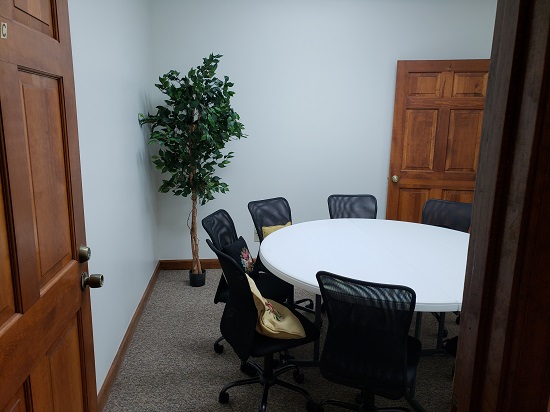
I have a nifty, bright office where we can spread our work out on a round, white table. I wear nice clothes with a little style – what my mother termed “oomph,” usually from Bonomo’s – that I think the clients might enjoy.

But the clients and I both know, even with my faux tree and fashionable boots, I can’t play. Not against the bliss and oblivion offered by substances. We both go into the session knowing counseling vs. substances is laughable. Sometimes we do laugh, albeit ruefully. Then we give this counseling thing a go.

I urge clients to get medical care, the first line of treatment for substance use disorder. Medical care can directly treat some substance use disorders and provide relief for other accompanying physical and mental conditions that may be stressing the system and increasing the longing for relief through substances.

Then I offer evidence-based counseling protocols for assistance with substance use disorders, including cognitive behavior therapy (CBT), motivational interviewing, and contingency management. For fundamentals of these approaches, I use the umbrella term, “awareness skills.” We train with these skills in the most straightforward, interesting, engaging, and diverse ways I can think of.

We acknowledge the limits of skills. Science is getting closer, but so far can’t pinpoint exactly where and what is happening in the brain, so there are no direct ways to treat addiction. (The exception is opioid-based medications for opioid use disorder, which directly ameliorate the corresponding brain issues.) Counseling cannot accurately, efficiently, and directly treat the brain for addiction.

Risks lurk like beasts by my phony ficus tree: scientific uncertainty, the illness itself, co-occurring trauma and mental illnesses, return to active use, and those salivating “adverse consequences.” For many substances, there is no safe level of use, including the legal substances nicotine and alcohol. If the client is continuing to use substances, even minimally, a steel-toed boot hovers above the whole shebang, ready to drop. Given this scenario, a client simply showing up for an appointment is an act of heroism.

Although I have never had Army Special Forces training, I liken recovery from addiction to what I read and hear about the final survival test. Candidates are dropped into unknown territory, disoriented, with no weapons and no tools. Amidst conflict and instability, they are subjected to deprivations, dangers, and opponents’ unconventional tactics. Only their personal resources and their skills save them.

In a territory made unknown by the limits of science, with the potential for “adverse consequences” around every corner, people with substance use disorders don’t have the luxury of trial-and-error learning. We wrangle up strengths. We learn and immediately execute knife-sharp skills that research reports are effective, including silent, motionless observation. We race to save our lives.

Further reading

Recommended reading

To understand the research on addiction:

Anne Giles, M.A., M.S., L.P.C., is a counselor in  private practice in Blacksburg, Virginia. She can provide counseling services to residents of Virginia only. 

This content is for informational purposes only and is not a substitute for medical or professional advice. Consult a qualified health care professional for personalized medical and professional advice.

Last updated 11/26/19