Freeing Oneself from the Just-World Hypothesis

According to the just-world hypothesis, good things happen to good people and bad things happen to bad people. This thinking implies that people get what they deserve. If good things happen, people are acknowledged for their efforts. If bad things happen, people are to blame for incorrect or inadequate efforts.
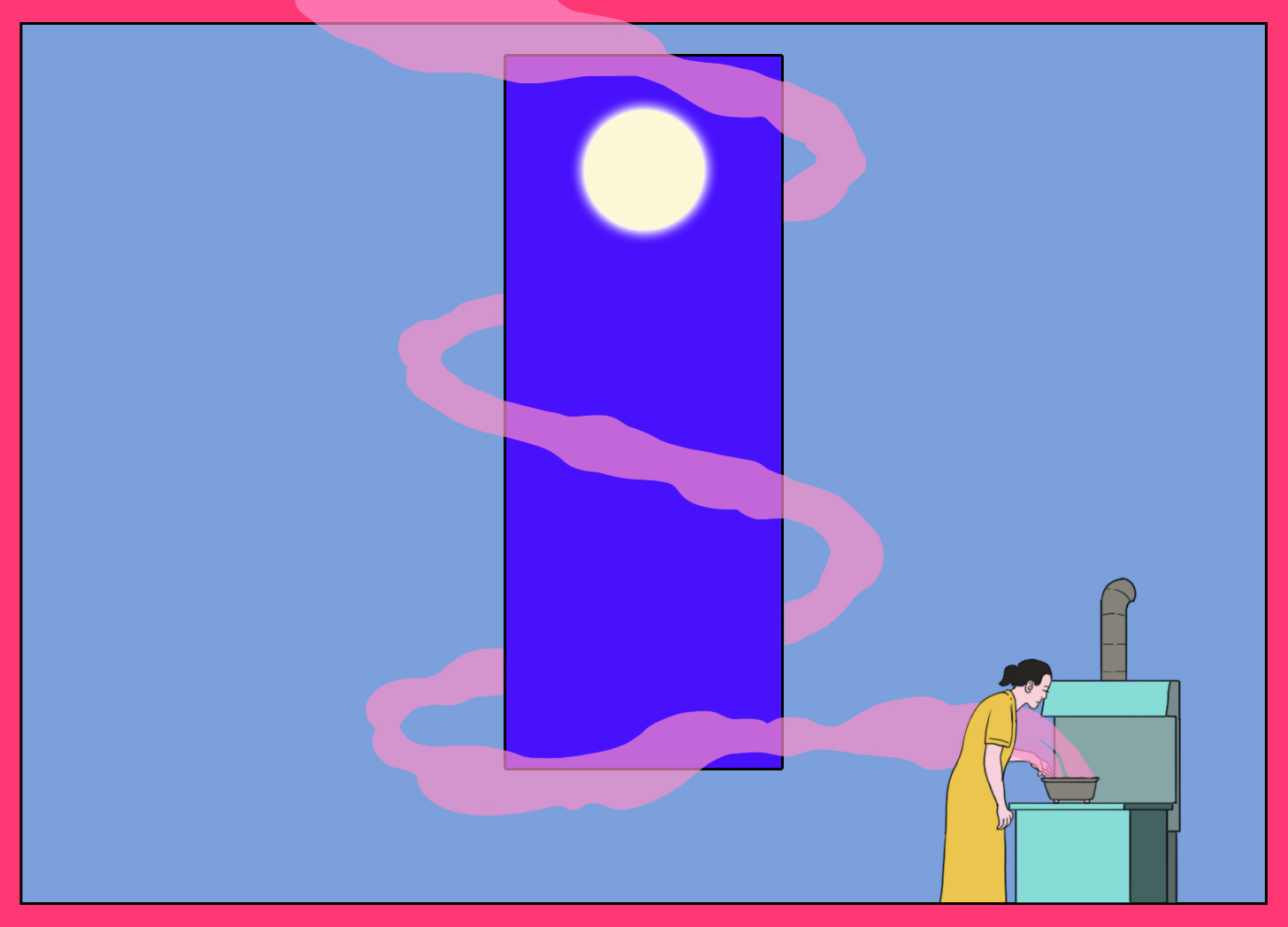
Restoring a sense of inner stability through soothing sensory experience

Challenges arise when good things happen to bad people and bad things happen to good people. When reality interferes with a belief, people have to change their thinking to fit reality or tell a story about reality to fit the belief. The human brain has evolved to perceive reality the best that it can. When stories don’t fit reality, distress results.

People who have experienced hardship, adversity, and trauma can be troubled by the just-world hypothesis. In general, humans do the best they can at the time with what they know. When something terrible happens and the person was doing the best they could, the just-world hypothesis mandates that the person must conclude that what happened is in some way their fault, they deserve it, and are to blame for it.

About the future, people can start feeling helpless, powerless, and hopeless. If their best efforts resulted in that occurrence, what else might happen?! Both trying to control the future and giving up on trying to control the future are logical when one believes one causes what happens.

The just-world hypothesis can also lead to thoughts such as, “This can’t be happening,” “This shouldn’t be happening,” “Things shouldn’t be this way,” ”People shouldn’t be that way,” “I shouldn’t have to experience this,” and “I shouldn’t be this way.” To try to feel better from righting “wrongs,” people can strive to change the unchangeable, i.e. people and things as they are, and reality as it is.

On the one hand, believing one causes what happens gives one a sense of power, control, predictability, order, and hope.

“I can fix this! If I just think hard enough and figure out what to do and work hard enough, I can make this better!” Or, “If I just withdraw and hold still and don’t go out, I can protect myself from anything else bad happening!”

If one’s own efforts help in some way, this is reinforced and the person persists effortfully, even though they are likely to experience diminishing returns because people, situations, and reality as a whole are complex and one person has little chance of affecting any of it.

Self-criticism, self-judgment, self-reprimand, while painful, still result from holding on to the just-world hypothesis. If I hold onto the belief that I can have an impact on what happened to me, in the meantime, I must also hold onto the belief that I am to blame.

Under siege from self-blame, on high alert to execute plans and/or stay protected, and to sense signs of new threats. a state of alarm reigns. In this state of fiery activation and sensitivity, new hurts – smaller in magnitude than the older, harder hits – feel like the beginning of a wildfire in which everyone and everything will be lost.

People can tolerate the pain of carrying the just-world hypothesis only so long. I hypothesize that one of the signature, diagnostic traits of post-traumatic stress disorder (PTSD) – avoidance – is mercy. People might drink alcohol, smoke pot or eat gummies, binge watch TV, play video games, watch porn, shop online, eat, do anything, anything to mercifully give themselves a break from the fire or the threat of it.

On the other hand, the data is in. A person’s best efforts didn’t protect themselves or loved ones from harm. No amount of goodness or retreat can keep reality from happening.

I think one of the most excruciating, sorrowful moments in adulthood is realizing that we are not causal. Freedom from the hegemony of the just-world hypothesis is bittersweet.  If we didn’t make bad things happen, we can’t make good things happen, either. Both are true.

It can feel heartbreaking to release the illusion that one’s birthright, one’s family’s standing, one’s morals, ethics, efforts, and achievements, all have such little power. The existential world view change required by this realization is massive.

Therapeutically, what might be helpful?

– With gentle self-kindness and the deepest compassion and humanity, see reality as it is.

– Become aware of feelings, thoughts, and sensory experience, data the human brain has evolved to assess in order to survive and thrive.

– Ask, “What are the facts?” and derive next steps based on facts.

– Restore one’s inner system to stability. Discover what individually and internally eases one’s inner system and do those. Meticulously find ways that are not avoidance strategies. Distraction is the opposite of attention. Attention is consciously chosen and given. Avoidance strategies may not have to be jettisoned, but they need to be absent from the inner system restoration effort.

– Acknowledge the human condition. Individual humans are subject to the human condition. This includes birth, death, and the vastness of possibilities in between.

Important. Thinking, “It could have been worse,” is based on a cognitive distortion. How? The human brain has not evolved to predict the future. What happened might have been worse, it might have been better, and it might have been no different. We can’t know. Believing one can know returns a person to self-causality, self-blame, and an incorrect assessment of the complexity of reality.

Further, in the universe of one person’s interiority, there is nothing worse than what happened. The person’s experience is true. Saying “It could have been worse” to people who have experienced hardship minimizes and invalidates their feelings, thoughts, and experiences and, in my view, is cruel.

– Gently acknowledge the context of the human condition. Try to find words for being part of the whole. Perhaps some version of this acknowledgement might fit one’s heart, mind, experiences, and perspective:

“In the 300,000 years of human history, among the 100 billion people estimated to have ever lived, what happened to me – or some form of it – happened to someone else. How excruciating, terrifying, and horrifying! How anguishing! How profoundly unfortunate this happened to me! And to others! How hard the human condition is! How brutal people and the world can be! And yet. I did not uniquely cause what happened to me. I was not singled out by the universe. My story is part of the human story. How my heart weeps for me and for all of us!”

– Know that the human brain is at its highest state of evolution. This is the best human brain that has ever been.

– Count on resilience and altruism. The concepts of “goodness” and “hope” are beliefs, not facts. However, although the human brain is incomprehensibly complex and diverse and difficult about which to make generalizations, current research reports that, in general, two things can be counted on in the human brain: a) to recover stability – to be resilient – and b) to be altruistic. Those sound pretty close to “hope” and “goodness” to me.

– Become aware of your values and priorities.

– Become aware of what you perceive is within your power to do.

– Do what you can.

In sum, with self-kindness and inner ease, powered by your values, directed by your priorities, with your resilient, altruistic brain, do what you can.

. . . . .

This post is informed by cognitive processing therapy, an evidence-based, therapy protocol for post-traumatic stress disorder, and by the brave, heroic people who have shared their stories of hardship with me.

I also want to acknowledge the bravery of the founders of cognitive processing therapy. In the second edition of Cognitive Processing Therapy for PTSD: A Comprehensive Therapist Manual, released April 23, 2024, in Handout 11.1b, page 176, the authors address loss and trauma from mass shootings.

Holding the just-world hypothesis can result in self-blame, victim-blaming, and other-blame. For further exploration, consider these articles from Verywell Mind, Psychology Today, and Wikipedia.

The just-work hypothesis is considered a logical fallacy or a cognitive distortion. Of possible further interest:

Illustration by Derek Zheng for Chapter 3 of Twig: 枝丫 by Anne Giles.

All content is for informational purposes only and is not a substitute for professional advice. Consult a qualified professional for personalized medical, health care, and professional advice.

On Grief and Grieving

To begin, let’s define terms.

Here are definitions of grief and grieving based on those offered by Mary Frances O’Connor, Ph.D., author of The Grieving Brain: The Surprising Science of How We Learn from Love and Loss (2021):

  • Grief. After loss, grief is the complex, anguished, yearning feeling associated with love, attachment, bonding, connection, and belonging.
  • Grieving is the process by which the heart, mind, and brain adapt and adjust to the absence.

Overviews of Mary-Frances O-Connor, Ph.D.’s research findings

In sum, the human brain has evolved to adjust to loss. The intensity of the love and bonding before the loss tend to align with the intensity of the grief after a loss. That is why “getting over grief,” “getting through grief,” and “healing from grief” may or may not be helpful goals. As artist Ann Shawhan puts it, “Big heart, big hurt.”

If a person can gently and kindly give the human brain time to re-navigate, love and grief may not be lessened, but the brain can adjust to the absence.

I co-travel with grief. I am continuing on and I miss my beloved people and beings profoundly. Both are true at the same time.

Memories and rumination after loss

Memory is complex.

Distressing images may arise after loss.  Although clinically termed intrusive memories, the brain may be attempting to cue a person to be cautious, attempting to help the person to remember in order to protect them from further harm.

People who have experienced loss can find themselves analyzing or replaying the end, or rehearsing what they would do in the future. Although clinically termed rumination, the human brain may be attempting to practice mercy, looking for missed details that might undo it all, looking for some way to ease the ache.

Giving time to intrusive memories and to replaying losses may inadvertently deepen memories through repetition, as if one were using a flashcard deck to memorize old hurts. Practicing shifting one’s attention – rather than following the narrative with its sad, but known end – may provide balm to the mind and heart and assist with helping the brain adjust to loss.

Intrusive memories and rumination are common after loss and cause distress and fatigue. To ease this distress, one can acknowledge the thoughts, acknowledge the human brain’s attempt to be merciful (“Ah, brain, that’s you trying to help me again”), and shift one’s attention to one’s values and priorities.

Other important, grief-related terms

Ambiguous grief: Simultaneously wishing for the person or being to die and free themselves and you – and wanting to hold onto them forever.

Anticipatory grief: Feeling grief now at the slow death of the person’s selfhood or the being’s identity, all the while knowing grief will occur again when the life ends.

Cumulative grief / compound grief: The complex feelings that occur after experiencing cascading losses in rapid succession without time to adjust to each loss. Experiencing cumulative grief is inherent to aging.

“The grief is the love.”
David Kessler

Disenfranchised grief / Unacknowledged grief: From private losses, feeling grief that others may not believe is valid or may not understand.

Existential grief: Sadness experienced over the inability to find meaning from loss and a resultant sense of futility about the future.

Traumatic grief: Occurs in response to a death or loss that is sudden,  shocking, alarming, and often involves a traumatic event.

Separation distress: Sadness, anxiety, and unease experienced from severing of bonds and the resultant neurobiological impact.

Secondary losses: Beyond a primary loss, additional tangible and intangible losses such as companionship, identity, self-concept, property or real estate, financial stability, social position, world view, and others.

“New losses bring up old losses”: Emotions, cognitions, experiences, and memories are experienced, conveyed and stored in the brain through connections and interconnections between neurons (neural pathways). New experiences may share similarities with previous experiences and activate the same neural pathways. When a loss occurs, similarities may be associated with – and be activated by – the type of loss, the feelings involved, or environmental cues. This intertwining of connections is why “a new loss brings up old losses.”

Other types of grief may include “overshadowed grief, cumulative grief, triggered grief, derailed grief, and conciliatory grief.”

Possible considerations

“[E]xperiential avoidance and rumination play a role in the persistence of complicated grief.” (Eisma et al., 2021)

“All grievers can benefit from support focused on understanding their grief, managing emotional pain, thinking about the future, strengthening their relationships…learning to live with reminders of the deceased, and connecting with memories.” (Meichsner et al., 2020)

Untitled by Trish Shelor White

“Grief will always be part of me, not as a superpower nor a thorn in my side but as a reminder that only a love so staggering in its intensity could produce an equivalent amount of sadness.”
– Rachel Daum

Here are the worst things people can say to others who are grieving (and to themselves). Here are the worst traits of people who try to help. (Please scroll to the bottom of that page to view the list.)

Some downplay grief after COVID and the pandemic. However, “this study demonstrated that pre-COVID-19 diagnoses and understandings of grief are not sufficient to picture grief during and after the COVID-19 pandemic. These grief experiences are more complex and deserve further exploration” (Nierop-van Baalen et al., 2023).

Image: “Untitled” by Trish Shelor White

Last updated 05/21/2025

This content is for informational purposes only and is not a substitute for medical or professional advice. Consult a qualified health care professional for personalized medical and professional advice.

Reality Is Complex

Reality is complex.

Reality is complex.

The reality of a person’s interiority – feelings, thoughts, sensations, personal history, culture and more – is also complex.

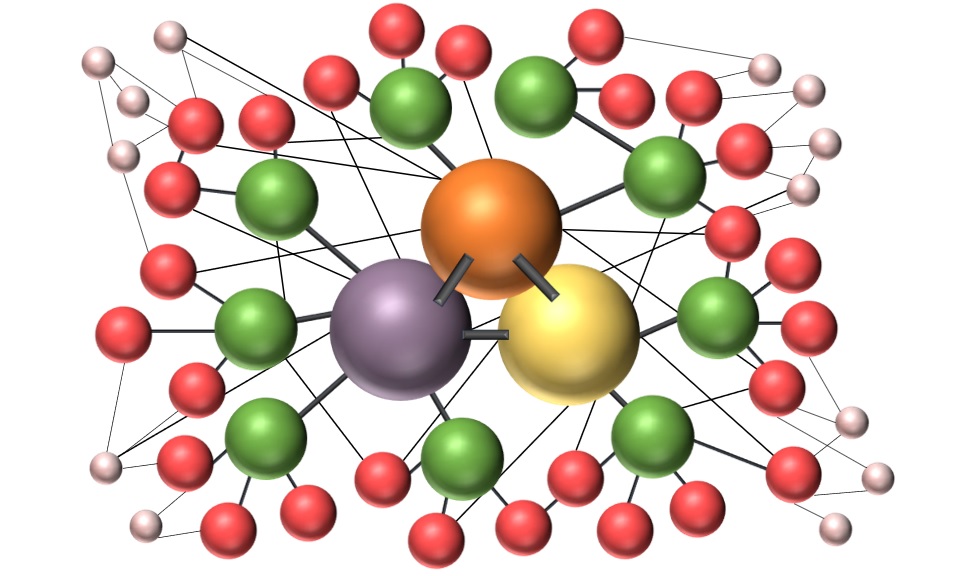
In the image accompanying this post – inspired by work by Ben Farrell – I imagine the spheres as factors of varying degrees of magnitude, operating multi-directionally and dynamically in space, influencing the entire system.

More specifically:

  1. Large spheres can be used to envision the magnitude of the impact of some factors on the entire system.
  2. Small spheres can be used to envision the impact of one small, conscious effort – or unconscious action – on the entire system.
  3. The size of spheres can be changed.
  4. Lines may represent many concepts. They are bidirectional.
  5. Use of any one factor may be necessary – but may not be sufficient –  to change the system. Engaging with multiple factors at varying magnitudes may be needed to change the quality of one’s inner experience and impact one’s outward actions.

For mental health purposes, spheres in the image might be visualized as:

Strengths. A person’s strengths, values, and priorities have power to impact the entire system in small and profound ways.

Skills. Three of the most powerful awareness skills people can use to assist themselves with mental health challenges are self-care, emotion regulation, and attention control. Skills can be used anywhere within a complex system to influence how it works.

Challenges.  Three of the top reasons people seek counseling are for help with feelings or states of anxiety and/or depression, task completion, and problematic behaviors. Acknowledging the existence of challenges within a system offers opportunities to derive strategies to address them.

Situations. People seek counseling for help with myriad situations, from relationship challenges, family conflicts, and work and school issues, to traumatic experiences and loss of loved ones. Seeing the situation as occurring within a complex system can be helpful on many levels.

Thoughts. The beautiful human brain is a thought-generating machine. Unless a person is experiencing genuine threat, most feelings result from thoughts. Central to a sense of well-being is the ability to decide which thoughts that arise will receive one’s attention. The most powerfully helpful and unhelpful thoughts can be identified within the system and addressed skillfully.

Application

I hypothesize that people can gain awareness of the complexity of reality as it is – to the best of their ability to perceive it – then use “awareness skills” to, nearly on-demand, engage in emotion regulation, attention direction, and thought management. In turn, they can engage in life based on their values and priorities, recover from hardships inherent to the human condition, and ameliorate problematic patterns of feeling, thinking, behaving, working, and relating.

Image inspired by, and adapted from, work by Ben Farrell.

Thinking inspired by the systems thinking of my father, Robert H. Giles, Jr.

Last updated 2/25/2024

This content is for informational purposes only and is not a substitute for medical or professional advice. Consult a qualified health care professional for personalized medical and professional advice.

Begin and End with Self-Kindness

I hypothesize that the extent to which people can gain awareness skills – with “awareness skills” defined as the ability to, nearly on-demand, engage in emotion regulation, attention direction, and thought management – is the extent to which they can engage in life based on their values and priorities, recover from hardships inherent to the human condition, and gain mastery of problematic patterns of feeling, thinking, behaving, working, and relating.

Although avoidance and distraction logically may provide a short-term break from uncertainty, boredom, or distress, the reality of one’s interiority and the reality of the outside world are present and require addressing. With awareness, addressing reality can be done humanely and strategically.

Self-kindness

What do my reviews of research literature and my education, training, and professional and personal experience suggest can support acquiring and deepening awareness skills?

Self-kindness. Self-care. Beginning with the end in mind. A schedule. Practicing skills during slow times so they are readily available during challenging times.  Acknowledging intensity. If not in danger, pausing. Differentiating between possibilities (a range of equally likely outcomes) and probabilities (the likelihood of this outcome occurring over that one). Acknowledging that opposites can both be true. Adjusting. Appreciating. Catching judgment and replacing it with compassion. Learning a new skill. Gaining basic knowledge of how the human heart, mind, and brain work. Gaining knowledge of effective relating with self and others. Self-kindness.

I will add that, in my nearly 65 years on the planet, I have not experienced a time that called for a greater measure of a trait currently difficult to measure by science: courage.

Beginning in childhood, I was keenly aware of my great-grandparents’, grandparents’, and parents’ thinking about life and how to live it well. Of this list of eight events considered by a panel of historians to be the most stressful in U.S. history, my family members or I lived through six of them. I was a history major as an undergraduate. I have studied all national and word events mentioned in the article. I deem my views informed.

I think these times call for nearly heroic bravery, attention, determination, and inventiveness. I would have wished stable times for all of us to explore our strengths and create along the way. Written languages, themselves, were created during stable times! Certainly, possibilities still exist. But I posit that, today, cultivating a quiet, inner fortitude – perhaps unnoticed and unappreciated by others – may need to be the ultimate act of self-kindness.

. . . . .

“Self-care in this sense is an exceedingly radical idea.”
– Daniel Schreiber, Alone: Reflections on Solitary Living (p. 101). August 1, 2023. Reaktion Books. Kindle Edition.

Image: Stolk, iStock

All content is for informational purposes only and is not a substitute for professional advice. Consult a qualified professional for personalized medical, health care, and professional advice.

How Counseling Works: A Plain Language Summary in Simplified Chinese Characters and English

The following is a plain language summary of how counseling works. With great assistance from Chinese instructors, I have written what I can in both Simplified Chinese Characters and English. What remains in English is still beyond my vocabulary to translate. For myself and others learning to read Simplified Characters, pinyin is included.

心理咨询如何用简单的语言总结
xīnlǐ zīxún rúhé yòng jiǎndān de yǔyán zǒngjié
A Plain Language Summary of How Counseling Works

在西方的心理咨询中,我们把“内心体会”定义为意识的感受和想法。平时,在东方的思维方式中,感觉和想法是在一起的,不是分开的。
Zài xīfāng de xīnlǐ zīxún zhōng, wǒmen bǎ “nèixīn tǐhuì” dìngyì wéi yìshí de gǎnshòu hé xiǎngfǎ. Píngshí, zài dōngfāng de sīwéi fāngshì zhōng, gǎnjué hé xiǎngfǎ shì zài yīqǐ de, bùshì fēnkāi de.
In western counseling, our “inner experience” is defined as awareness / consciousness of feelings and thoughts. Usually, in eastern thought, feelings and thoughts are seen as together, not separate.

无论从东方还是西方,人类都希望能用他们的意志力解决问题。
Wúlùn cóng dōngfāng háishì xīfāng, rénlèi dōu xīwàng néng yòng tāmen de yìzhì lì jiějué wèntí.
Whether from east or west, all humans want to be able to solve problems using their willpower.

然而,在西方的心理咨询中这是假设:如果人们成为意识到自己的感受和想法, 这创造了一个远景. 在这个远景中,也许就看到了解决问题的可能性。当人们看到现实的本来面目时可能性就会打开。
Rán’ér, zài xīfāng de xīnlǐ zīxún zhōng zhè shì jiǎshè: Rúguǒ rénmen chéngwéi yìshí dào zìjǐ degǎnshòu hé xiǎngfǎ, zhè chuàngzàole yīgè yuǎnjǐng. Zài zhège yuǎnjǐng zhōng, yěxǔ jiù kàn dào liǎo jiějué wèntí de kěnéng xìng. Dāng rénmen kàn dào xiànshí de běnlái miànmù shí kěnéng xìng jiù huì dǎkāi.
However, in western counseling, this is the hypothesis: If people can become aware of their feelings and thoughts, a vista opens. In that vista, possibilities for solving problems can be seen. When people see reality as it is, possibilities open.

所以,解决个人问题时,和使用意志力相比,意识对我们的内心体会有更帮助.
Suǒyǐ, jiějué gèrén wèntí shí, hé shǐyòng yìzhì lì xiāng bǐ, yìshí duì wǒmen de nèixīn tǐhuì yǒu gèng bāngzhù.
Therefore, for solving personal problems, compared to using willpower, it is more helpful to use our awareness of our inner experience.

. . . . .

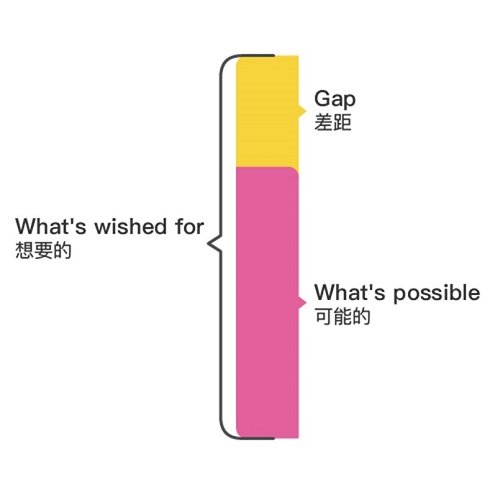
所想要的和可能的之间的差距导致了我们内心的痛苦。
Suǒ xiǎng yào de hé kěnéng de zhī jiān de chājù dǎozhìle wǒmen nèixīn de tòngkǔ.
The gap between what is wished for and what is possible causes our inner pain and suffering.

Gap between what's wished for and what's possible

为了帮助我们内心的痛苦:
Wèile bāngzhù wǒmen nèixīn de tòngkǔ:
To help with our suffering:

第一,我们会帮助你对这差距导致的痛苦使用自我慈悲。我们用自我仁慈来安慰自己。
Dì yī, wǒmen huì bāngzhù nǐ duì zhè chājù dǎozhì de tòngkǔ shǐyòng zìwǒ cíbēi. Wǒmen yòng zìwǒ réncí lái ānwèi zìjǐ.
First, we use self-compassion to help ease the inner pain created by the gap. We comfort ourselves with self-kindness.

自我慈悲 zìwǒ cíbēi self-compassion
自我仁慈 zìwǒ réncí self-kindness

第二,我们会帮助你慢慢地适应和接受什么是可能的。
Dì èr, wǒmen huì bāngzhù nǐ màn man de shìyìng hé jiēshòu shénme shì kěnéng de.
Second, with self-compassion and self-kindness, we help ourselves to slowly adjust to, adapt to, and accept what’s possible.

适应 shìyìng adjust, adapt

第三,我们发现价值观和优先事项,然后根据这些决定下一步。
Dì sān, wǒmen fāxiàn jiàzhíguān hé yōuxiān shìxiàng, ránhòu gēnjù zhèxiē juédìng xià yībù.
Third, we discover values and priorities, then, based on those, decide next steps.

价值观 jiàzhíguān values
优先事项 yōuxiān shìxiàng priorities

Here are some other terms and ideas that may be useful.

意识意识,了解 yìshí, liǎojiě awareness, consciousness
意识到 yìshí dào to become aware of
了解自己的心理 liǎojiě zìjǐ de xīnlǐ to understand one’s own
psychology; to be psychologically-minded

These concepts can overlap and intersect:

真实的自我 zhēnshí de zìwǒ true self; authentic, genuine, real self;
separate from, and unaffected by, external pressures 外在压力 wài zài
yālì, such as corporate, familial, religious, societal, cultural, or national expectations.

核心自我 héxīn zìwǒ core self; innate traits as an individual human;
stable and unaffected by external events, whether the events are
experienced as joyful or painful.

When I use the term “true self,” I am merging both of those concepts.

. . . . .

当人们看到现实的本来面目时可能性就会打开。
Dāng rénmen kàn dào xiànshí de běnlái miànmù shí kěnéng xìng jiù huì dǎkāi.
When people see reality as it is, possibilities open.

此外,当人们,不最小化也不最大化,看到现实的本来面目时可能性就会打开。
Cǐwài, dāng rénmen, bù zuìxiǎo huà yě bù zuìdà huà, kàn dào xiànshí de běnlái miànmù shí kěnéng xìng jiù huì dǎkāi.
Moreover, when people neither minimize nor maximize, but see reality as it is, possibilities open.

当事情一起发生并产生更大的积极影响时,协同效应就会发生。
Dāng shìqíng yīqǐ fāshēng bìng chǎnshēng gèng dà de jījí yǐngxiǎng shí, xiétóng xiàoyìng jiù huì fāshēng.
Synergy happens when things come together and create a bigger positive effect than they would alone.
Inner wisdom

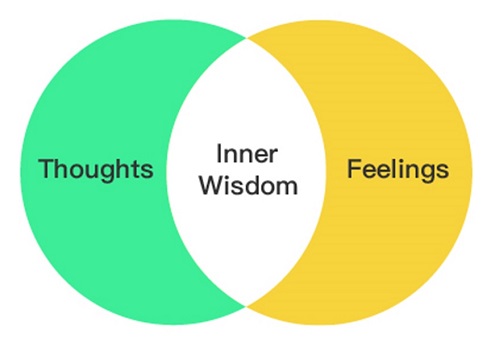
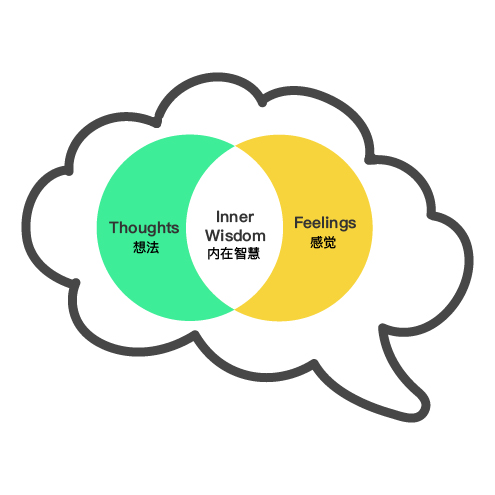
当人们意识到他们的感受和想法时,协同效应产生了。这个可以成为”内在智慧 。“
Dāng rénmen yìshí dào tāmen de gǎnshòu hé xiǎngfǎ shí, xiétóng xiàoyìng chǎnshēngle. Zhège kěyǐ chéngwèi” nèizài zhìhuì.“
When people can become aware of their feelings and thoughts, synergy is created. That synergy can be termed “inner wisdom.”

协同效应 xiétóng xiàoyìng synergy
内在智慧 nèizài zhìhuì inner wisdom

Although “depression“ and “anxiety” are common terms, they are so diversely used and defined that they’re not very useful. Becoming aware of the real, specific, precise feelings and thoughts created by the gap between what one wished for, what has happened, and what is now possible – and then helping oneself with those feelings and thoughts – is more directly helpful.

Using their inner wisdom, people can become aware of their true self’s needs and wants, strengths and preferences, values and priorities, and derive strategies to live lives of integrity and personal meaning.

A comprehensive explanation of how to develop awareness skills is here.

. . . . .

有时候,当一个人经历过不好的事情时,它会觉得自己是受害者。他们需要夺回他们的”力“:自己力量,权力和生命力。
Yǒu shíhòu, dāng yīgè rén jīnglìguò bu hǎo de shìqíng shí, tā huì juédé zìjǐ shì shòuhài zhě. Tāmen xūyào duóhuí tāmen de” lì “: Zìjǐ lìliàng, quánlì hé shēngmìnglì.
Sometimes, when a person has a bad experience, they can feel like a victim. They need to get their power back: their personal power, their sense of authority, and their life force.

经历 jīnglì experience
受害者 shòuhài zhě victim
夺回 duóhuí take back
力量 lìliàng personal power
权力 quánlì authority; power
生命力 shēngmìnglì vitality; life force; power

怎么做?
Zěnme zuò?
How?

记得你的个人价值。
Jìdé nǐ de gèrén jiàzhí.
Remember your value.

从过去对你的价值观和优先事项上转移你的注意力.
Cóng guòqù duì nǐ de jiàzhíguān hé yōuxiān shìxiàng shàng zhuǎnyí nǐ de zhùyì lì.
Shift your attention from the past to your values and priorities.

转移 zhuǎnyí shift
注意力 zhùyì lì attention
价值观 jiàzhíguān values
优先事项 yōuxiān shìxiàng priorities

. . . . .

Stability results from providing care for one’s heart, mind, and body. To support personal growth and personal psychological work, people need as much stability as possible.

稳定 wěndìng stability
心灵, 思想, 和身体 xīnlíng, sīxiǎng, hé shēntǐ heart, mind, and body

  • Here is a self-care checklist 自我安慰清单 zìwǒ ānwèi qīngdān.
  • Here are exercises that can help people become aware of their
    values and priorities 价值观 jiàzhíguān values | 优先事项 yōuxiān shìxiàng priorities.

. . . . .

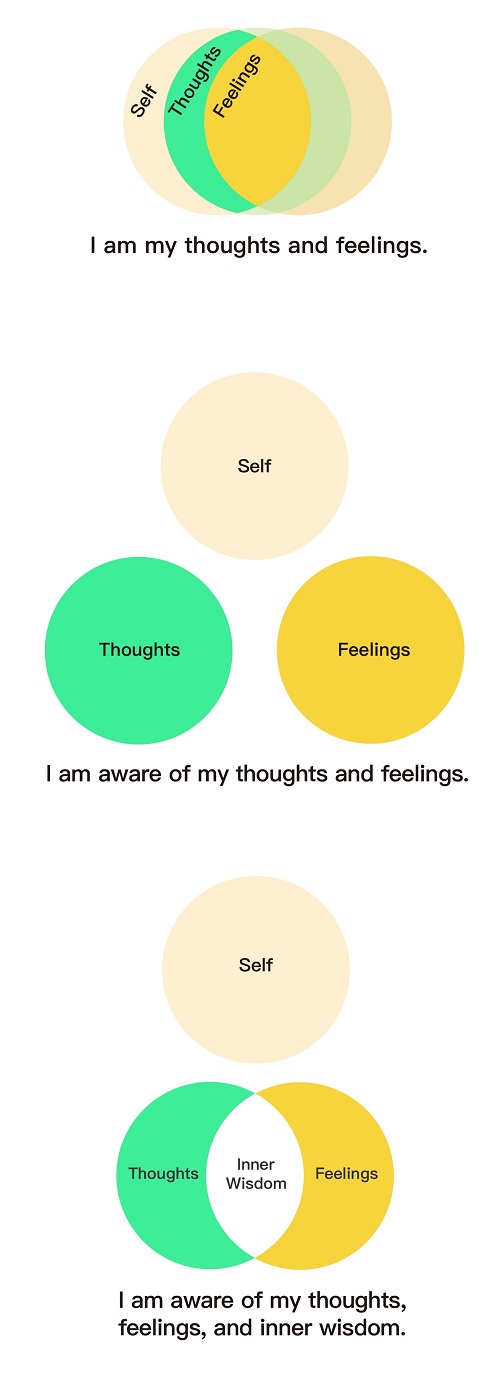
Awareness gives access to inner wisdom.我是我的想法和感受。
I am my thoughts and feelings.
我意识到我的想法和感受。
I am aware of my thoughts and feelings.
我意识到我的想法,感受,和内在智慧。
I am aware of my thoughts, feelings, and inner wisdom.
内在智慧 nèizài zhìhuì inner wisdom

The concept of “inner wisdom” is informed by:

Inner wisdom and how the brain works

The content of the post is informed by cognitive theory-based therapy protocols, including cognitive behavior therapy (CBT), dialectical behavior therapy (DBT), and cognitive processing therapy; acceptance and commitment therapy, (ACT), Internal Family Systems (IFS), schema therapy, strengths-based therapy protocols, and existential therapy.

The content is written in plain language to help people understand upon a first reading and to help dispel misinformation.

I am indebted to Hou Huiying for her help in translating these sentences. Any errors are mine.

Graphics by Ren Jing.

Last updated 9/12/2023

This content is for informational purposes only and is not a substitute for medical or professional advice. Consult a qualified health care professional for personalized medical and professional advice.